
Top 10 Sports Photos of All-Time: The Images That Transcended Sports
Muhammad Ali, Babe Ruth, Ty Cobb, Carlton Fisk, and Willie Mays—these are the 10 greatest sports photographs ever captured. They are iconic because they transcend sports and mere games. They teach us about the human spirit. They have became part of American culture.


A while back, I published the first part of this series by ranking the list of the sports photos I considered most iconic of all-time from #20 through #11.
Those photos were great, but these are next level. These photos don't draw their importance due, solely, to the legends and historic moments captured in them, but also due to the raw emotion and meaning it evokes in the viewer.
Each photo has a story to tell. Each photo is a snapshot of the time and era they were taken. Look deep enough at each photo and you will derive deeper and deeper meanings from each.
#10 — Bird and Dr. J Go for the Throat(1984)
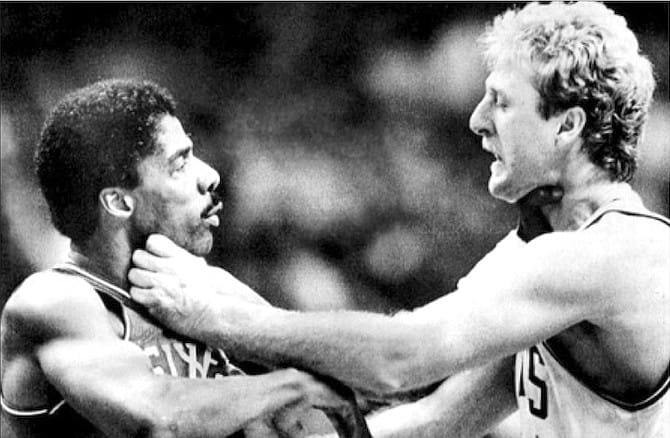
For me, this photograph perfectly captures what it felt like growing up in the 1980s watching the Boston Celtics rise into a dynasty. Before the legendary Celtics-Lakers Finals battles that would define the decade, the biggest obstacle standing in Boston’s way in the Eastern Conference was the Philadelphia 76ers and their aging superstar Julius Erving—"Dr. J."
This unforgettable moment came during a regular season game in 1984 when the dignified Erving and "The Hick from French Lick" — two of the biggest stars in basketball — literally ended up at each other’s throats. That is what makes the image so striking. Superstars are usually polished, controlled, and protected. Here, all of that disappeared, revealing the raw hatred, intensity, and competitiveness that defined 1980s NBA basketball. It also represented a passing of the throne from one era to another.
#9 —Yogi Berra Leaps Into Don Larsen's Arms After World Series Perfect Game (1956)
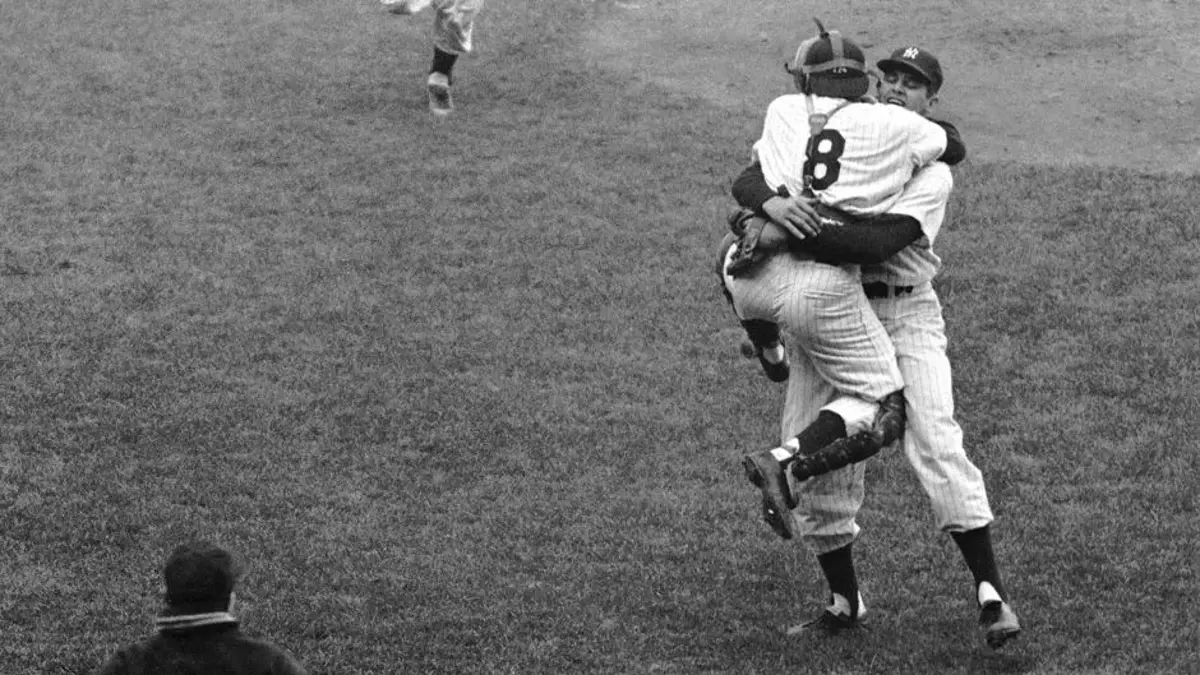
No celebration in sports has ever matched the authenticity of this moment. Right after a called strike three sealed the only perfect game in World Series history, Yankees' catcher Yogi Berra rushed to the mound and leaped into the arms of pitcher Don Larsen. It is a moment that captures the jubilation, the comradery, the passion, and the boyish charm of baseball. It was a reminder that these were grown adults playing a kids' game. And that it was okay to react like a kid as an adult, sometimes.
#8 — Bloodied Y.A. Tittle Acknowledges The End (1964)
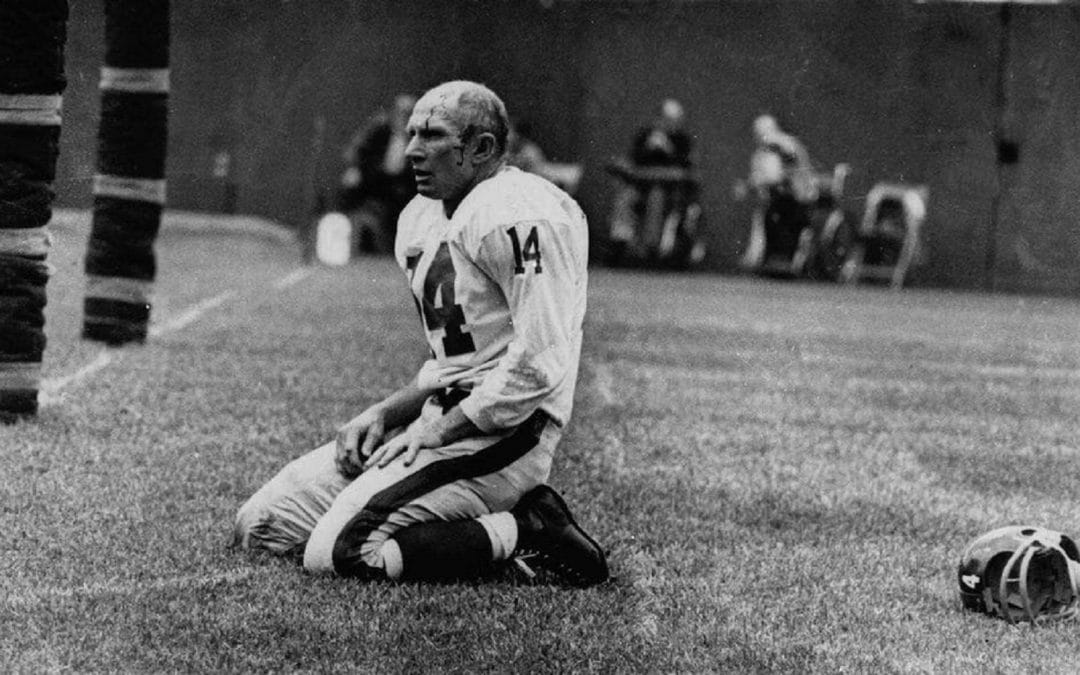
If football is war, this is the photo that epitomizes it. It is the image I see in my mind when I think of an athlete giving blood, sweat, and tears. It is also the image I think of when an athlete comes to the realization that their career has reached the end of the road. The moment they understand they can no longer play the game they dedicated their entire life to at the level they once could. The photograph shows 38-year-old Y.A. Tittle — one of the greatest quarterbacks in NFL history — bloodied, exhausted, and defeated after being relentlessly battered behind a dreadful New York Giants offensive line. More than just a football photo, it became a timeless symbol of aging, sacrifice, and the brutal finality of sports.
#7 — Ty Cobb's Spikes-High Slide (1910)
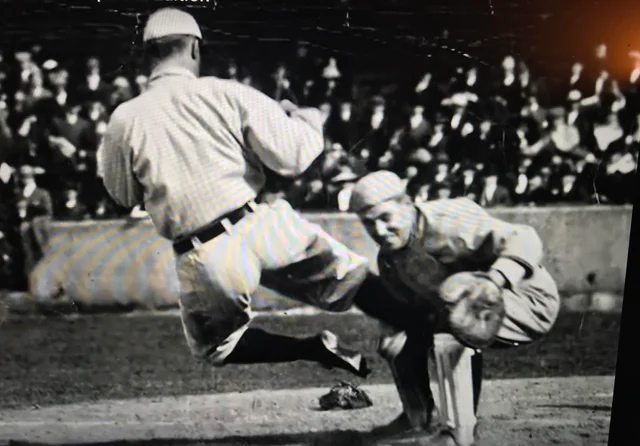
Babe Ruth is the greatest sports name ever, but no name ever conjures up more fear and intimidation than the name Ty Cobb. Few athletes in any sport carried a more ruthless reputation, and this photo is Exhibit A. Before Ruth transformed baseball with the home run, Cobb was widely considered the greatest player the game had ever seen — and he remains one of the handful of greatest players of all time. But, damn, was he dirty. Just look at this image: Cobb makes virtually no effort to slide into home plate, instead driving his spikes directly toward the midsection of an unsuspecting catcher. It perfectly captures the violent edge and win-at-all-costs mentality that made Cobb both legendary and feared.
#6 — Saquon Barkley's Backwards Leap (2024)

This is the only color image on my list of the top ten sports photos of all time, and also the only one taken in the 21st century. This photo of Saquon Barkley somehow hurdling a defender backwards would seem unbelievable even in a video game. But it happened — in real life, during an NFL game. The image is a testament to just how extraordinary modern athletes have become. The combination of athleticism, balance, vision, creativity, body control, and pure explosiveness defies logic. It makes you wonder if there are any limitations to what the human body can do.
#5 — Willie Mays And "The Catch" (1954)
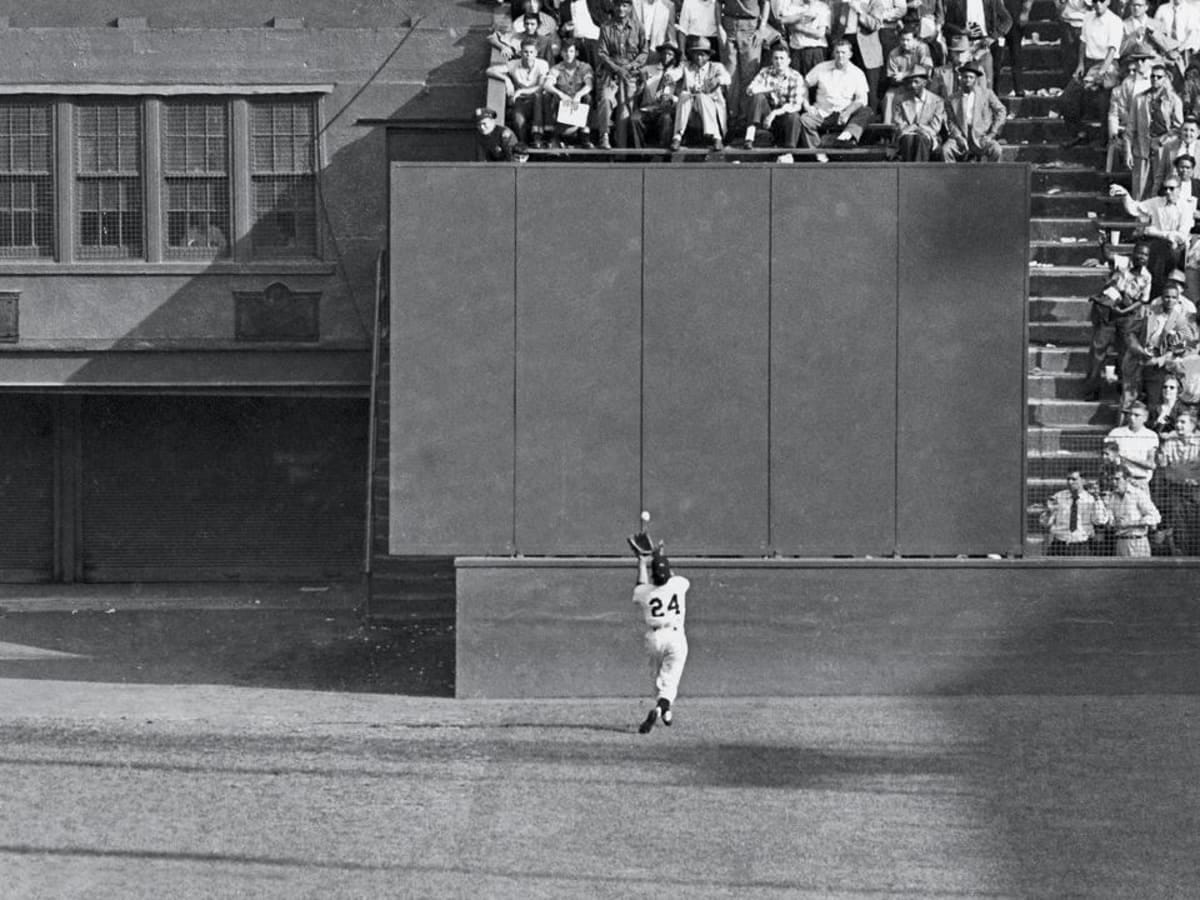
You know we are getting into the nitty-gritty of the top of this list when we have arrived at this iconic photo of Willie Mays making “The Catch” during the 1954 World Series. When Mays heard the thunderous crack of the bat, he turned his back to home plate and sprinted blindly toward a precise spot in the cavernous centerfield of the old Polo Grounds (483 feet to the center field wall) in New York.
At the final moment, Mays tilted his head back and stretched out his arms just in time to watch the baseball settle into his glove like a delicate baby bird falling out of a tree.
There have been many great catches in baseball history, but what elevates moments like this into something immortal is the stage on which they happen — under the brightest lights, with everything at stake, in the moments that matter most.
#4 — Carlton Fisk "Stay Fair" (1975)

Just like Willie Mays’ “The Catch,” this iconic image became immortal because of the stage on which it happened. The Boston Red Sox needed to win Game 6 of the 1975 World Series to stay alive. Carlton Fisk had hit only 10 home runs during an injury-filled season, and the marathon game itself had already been a roller coaster of emotional swings.
Late in the game, when Pete Rose dug into the batter’s box, he supposedly turned to Fisk behind the plate and soaked in the magnitude of the moment: “This is some kind of a game, isn’t it?”
By the time Fisk stepped to the plate in the bottom of the 12th inning, the Cincinnati Reds pitching staff was exhausted. In the words of Hall of Fame catcher Johnny Bench, pitcher Pat Darcy “had nothing left.” Fisk golfed a low-and-inside fastball down the left field line, then hopped wildly down the first base line, desperately waving the ball fair with every ounce of will power he could project. That is the exact moment captured in this photograph.
Few sports moments have become so deeply embedded in American culture that they are recreated in movies decades later. Yet even Robin Williams famously reenacted Fisk waving the ball fair while an exuberant Matt Damon watched in the 1997 film Good Will Hunting — proof that this moment transcended baseball and became part of Americana itself.
#3 — Muhammad Ali (1965)
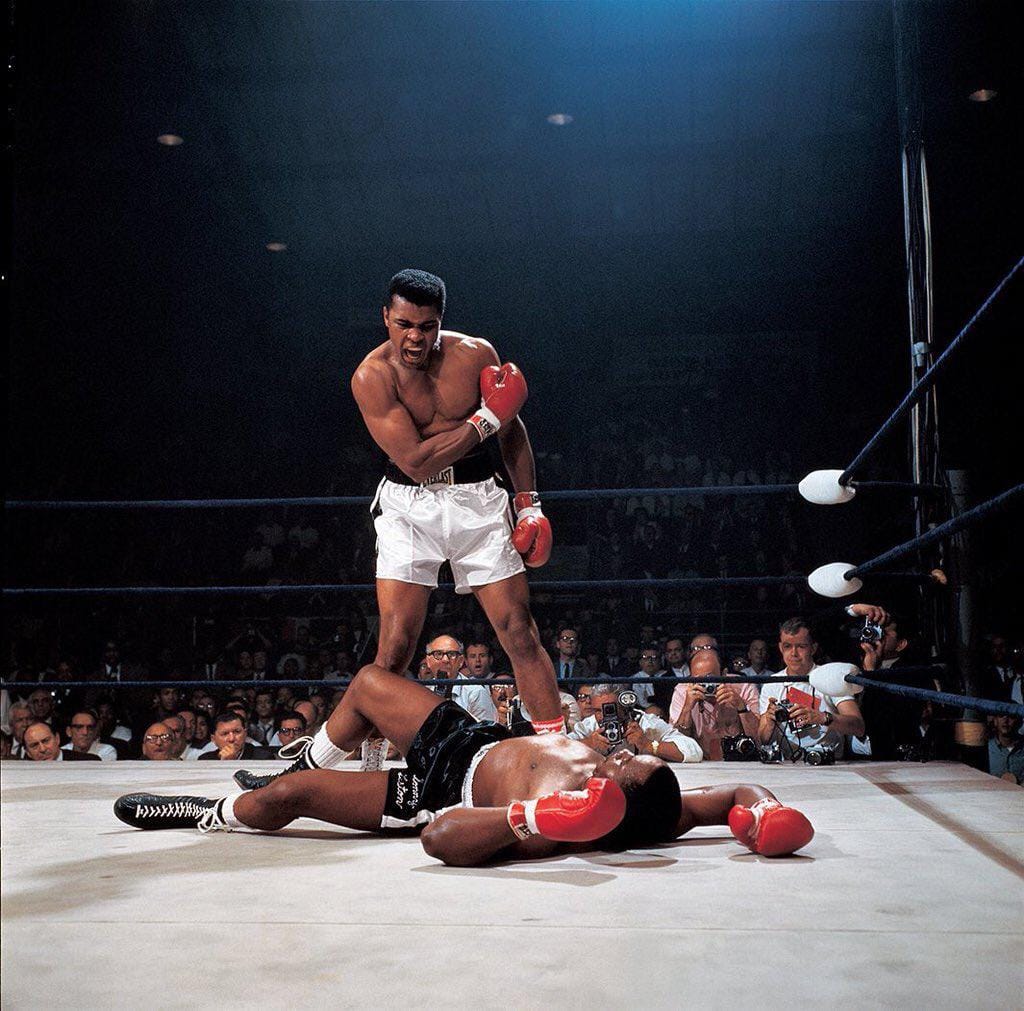
This photo of Muhammad Ali knocking out Sonny Liston is considered by many the greatest sports photograph ever taken. It is hard to argue against. To me, any of these top five photos could be interchangeable. Ali is one of the most iconic athletes and personalities in American sports history. He could be “so pretty” and charming one moment, then become absolutely terrifying when properly motivated — exactly as he appears here standing over Liston.
Everything about the image feels cinematic and larger than life: the dramatic lighting, Ali’s enraged expression, the flexed musculature in his stance, Liston sprawled helplessly on the canvas with his gloves raised awkwardly above his head, and even the stunned expressions of the reporters and photographers surrounding the ring.
The photograph captures far more than a knockout. It captures an athlete who commanded the entire sports world in America. It also freezes a volatile moment in American culture itself — complete with the racial tensions, political controversy, charisma, confidence, and defiance that surrounded Muhammad Ali throughout his career. This is one of those rare sports images that transcends athletics altogether. It could hang in an art gallery beside famous historical paintings, with observers spending hours debating every intricate detail — the emotion, the symbolism, the body language, the power dynamics, and what exactly the moment represented to America at that point in time.
#2 — Babe Ruth Bids Farewell (1948)
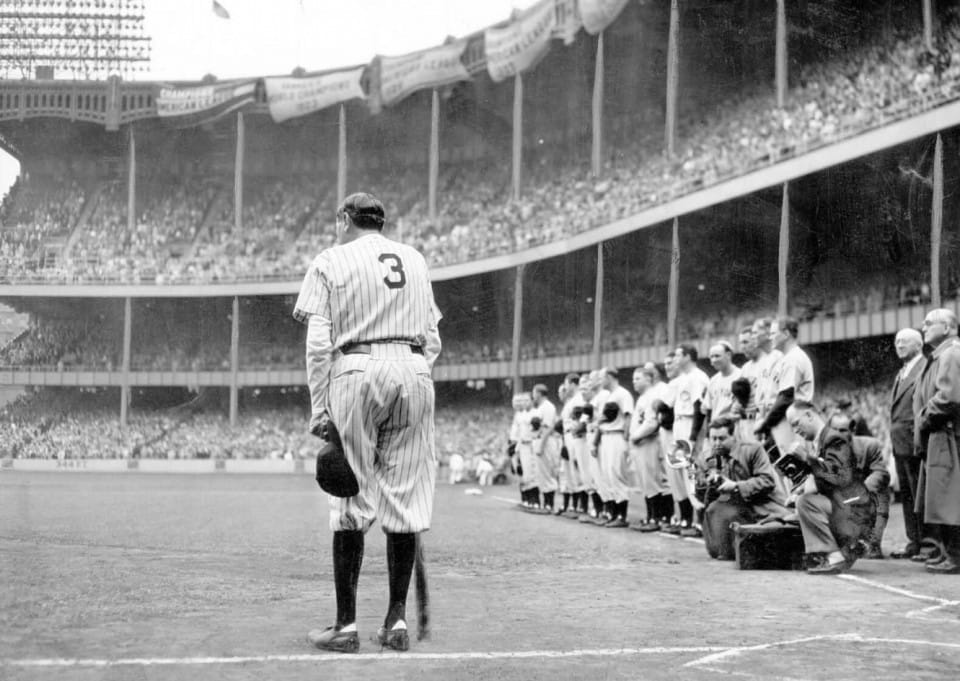
Much like the previous Y. A. Tittle photograph, this image captures the inevitable final chapter in every athlete’s arc. Except in this case, the athlete is Babe Ruth — perhaps the most iconic sports figure of them all.
Although this picture was taken 13 years after Ruth played his final game, it represented the last time he would ever wear the famed Yankees pinstripes. The photo was taken on June 13, 1948 at Yankee Stadium — “The House That Ruth Built.” Just two months later, Ruth would be dead from throat cancer at the age of only 53.
That knowledge adds tremendous gravitas to the image. Ruth had once been the most famous athlete in America, becoming one of the first sports stars to earn more money than the President of the United States. He was the larger-than-life figure who revolutionized baseball and transformed it into America’s pastime. Yet here stands Ruth leaning on his bat almost like a cane, hunched over as if bowing before the very game that gave him everything — and to which he gave so much in return. His famous No. 3 pinstriped uniform hangs loosely from a body weakened by months of illness and suffering.
Like the Tittle photograph, this image is a humbling reminder that no matter how large someone once seemed in life, all greatness eventually fades. None of us are immortal — not even the great Babe Ruth.
#1 — Bobby Orr Soaring Through The Air (1970)
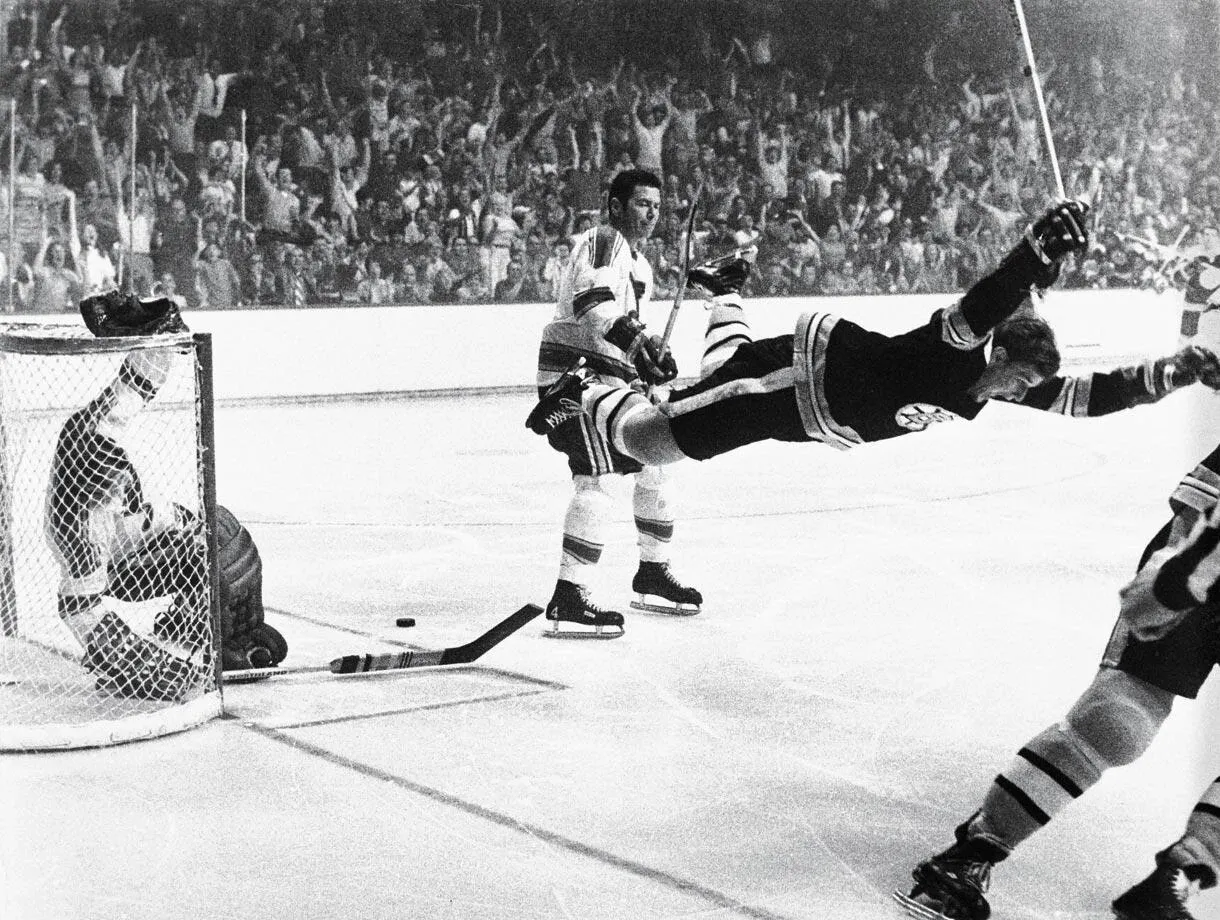
It is a testament to how iconic this photograph is that I placed it at the very top of my list despite never being a huge hockey fan myself. This image of Bobby Orr flying through the air after scoring the Stanley Cup-winning goal for the Boston Bruins in 1970 transcends the sport entirely. Even people like myself — who are not the biggest hockey fans in the world — can immediately recognize the beauty, emotion, and symbolism perfectly captured by this camera lens.
For a sport where bloody faces and missing teeth are widely accepted, the elegance of this moment stands in stark contrast to hockey’s brutality. Orr appears suspended in midair like Superman soaring through the sky as a raucous Boston Garden crowd erupts behind him in complete chaos.
The timing of the shot is almost impossible to comprehend — capturing the exact split second where victory, fatigue, validation, and jubilation collide into one iconic image. And this was 1970. There were no endless digital bursts from fans' camera phones or dozens of TV cameras locked on the rink like there are today. A handful of photographers had one chance to capture history in real time. As Eminem famously rapped years later, “You only get one shot, one opportunity.” Photographer Ray Lussier captured his — perfectly.
More than 50 years later, Bobby Orr soaring through the air remains one of the most recognizable and beloved images in sports history, especially Boston sports history — so much so that a statue outside TD Garden was built to immortalize the exact moment captured in this photograph.
Closing Thoughts
Like the Ali, Fisk, Mays, Ruth, and Tittle images, the Orr photograph transcended sports. In many ways, all of the photos on this list represent core truths about the human spirit — not merely the spirit of athletes.
Some capture the triumph and validation that come with achieving an improbable dream — the payoff for a lifetime of sacrifice, repetition, pain, practice, and relentless dedication. Others capture the inevitability of defeat and the vulnerability that comes with finally confronting an opponent, failure, injury, or ultimately Father Time itself.
What also makes these photographs extraordinary is that they were captured not just by camera lenses, but by perceptive human eyes. These photographers instinctively understood the gravity of the moments unfolding before them while they were actually happening. They recognized emotion, symbolism, tension, mortality, ecstasy, and humanity in real time — then froze those emotions forever in a single image.
That is why these photographs endure far beyond the games themselves. Their meaning transcends sports.
As I mentioned earlier, you could place these twenty images on the walls of an art gallery and people could spend days discussing the symbolism, emotion, context, and deeper meanings hidden within them. The athletes may have created the moments, but these photographs transformed them into timeless pieces of American culture.