Standing in the Shadows: Boston’s Most Underappreciated Stars

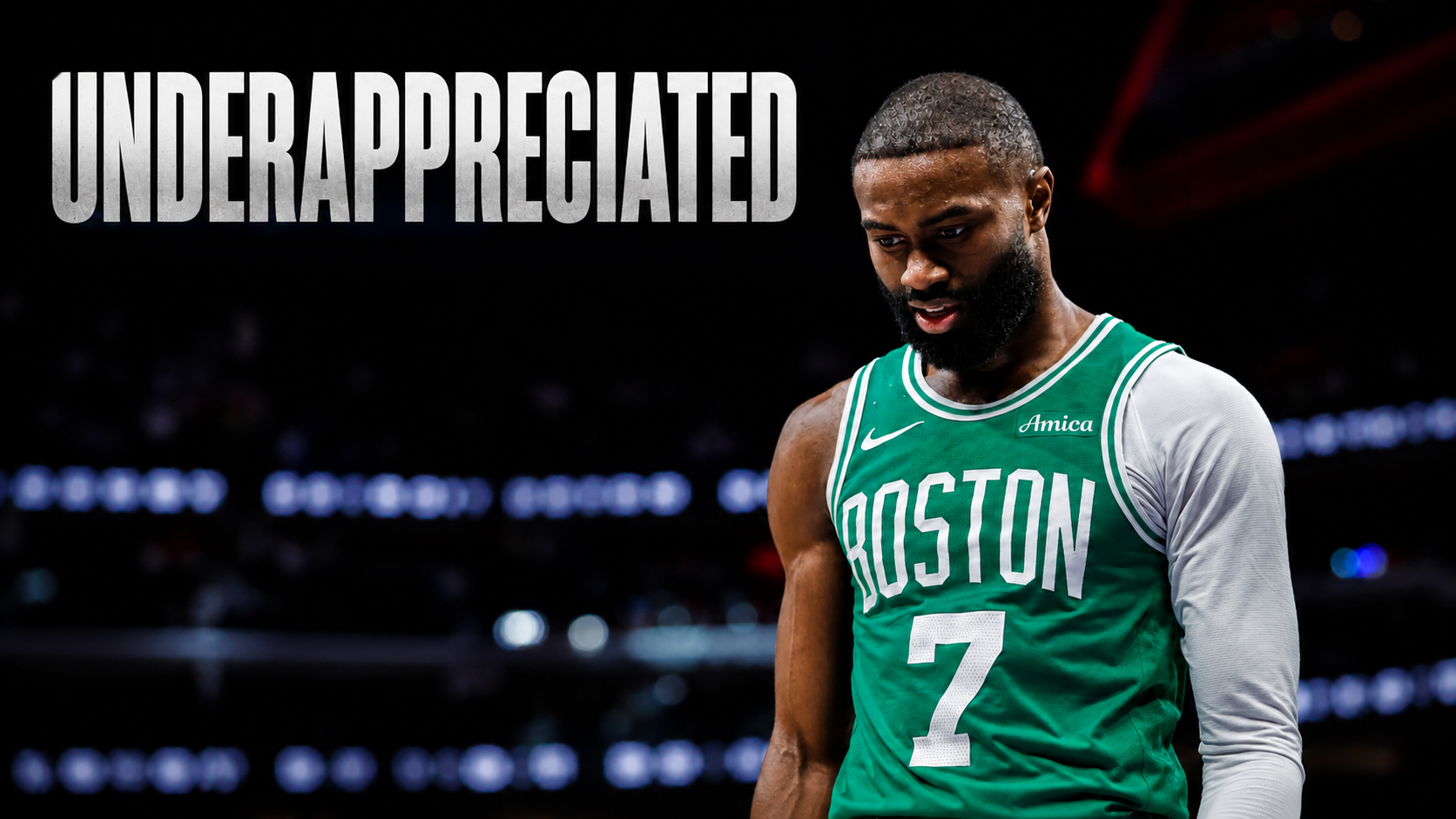
Jaylen Brown played only one season with the Celtics before Jayson Tatum got drafted and became the darling of Celtics' fans. Brown was never given a real chance to become the face of the franchise.
Brown was drafted in 2016 with the No. 3 overall pick. A year later, Tatum was drafted with the No. 3 overall pick. For nearly a decade, Tatum has, seemingly, been able to do no wrong in the Boston's public eye. Meanwhile, Brown had been viewed as a malcontent and pariah. He has been a lightning rod for criticism whenever something goes wrong with the Celtics.
That got me thinking about the top ten Boston athletes who had outstanding careers, yet went underappreciated among Boston fans during their playing days. Or maybe they've become forgotten to history when they deserve more respect.
Here's my top ten underappreciated Boston athletes of all-time:
#10 Ben Coates
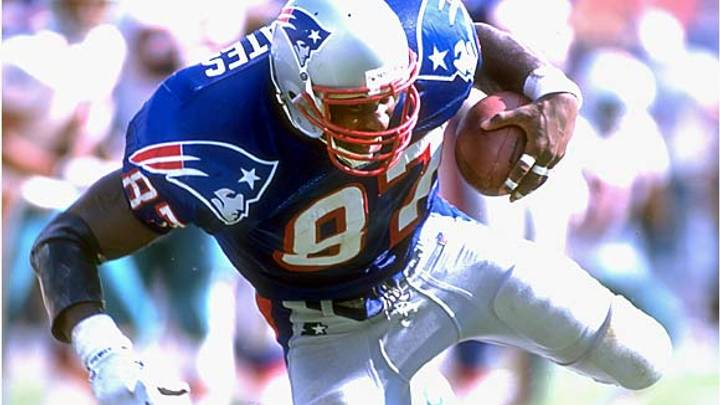
Ben Coates was Rob Gronkowski minus the personality, the Super Bowl titles, and Tom Brady. In 1994, Ben Coates was the best tight end in football. In his second season with young gunslinger, Drew Bledsoe—more on him later— Coates had 96 receptions for 1174 yards and 7 TDs. Even Gronkowski never had that many receptions in a single season.
Coates was built like a truck and ran like one after the catch. He ran through defensive backs, dragged safeties for extra yards, and slipped out of linebacker tackles with a combination of strength and balance that made him nearly impossible to bring down cleanly.
His Patriots career ended just before the franchise’s first dynastic run, but fortunately for him, he did get his Super Bowl ring — just not in New England.
Coates spent his final season with the Baltimore Ravens and caught three passes for 30 yards in Baltimore’s 34-7 win over the New York Giants in Super Bowl XXXV. Even there, though, he was overshadowed. The story of that Ravens team belongs mostly to Ray Lewis and one of the most devastating defenses in NFL history, leaving Coates once again as a great player standing just outside the spotlight.
#9 Nomar Garciaparra
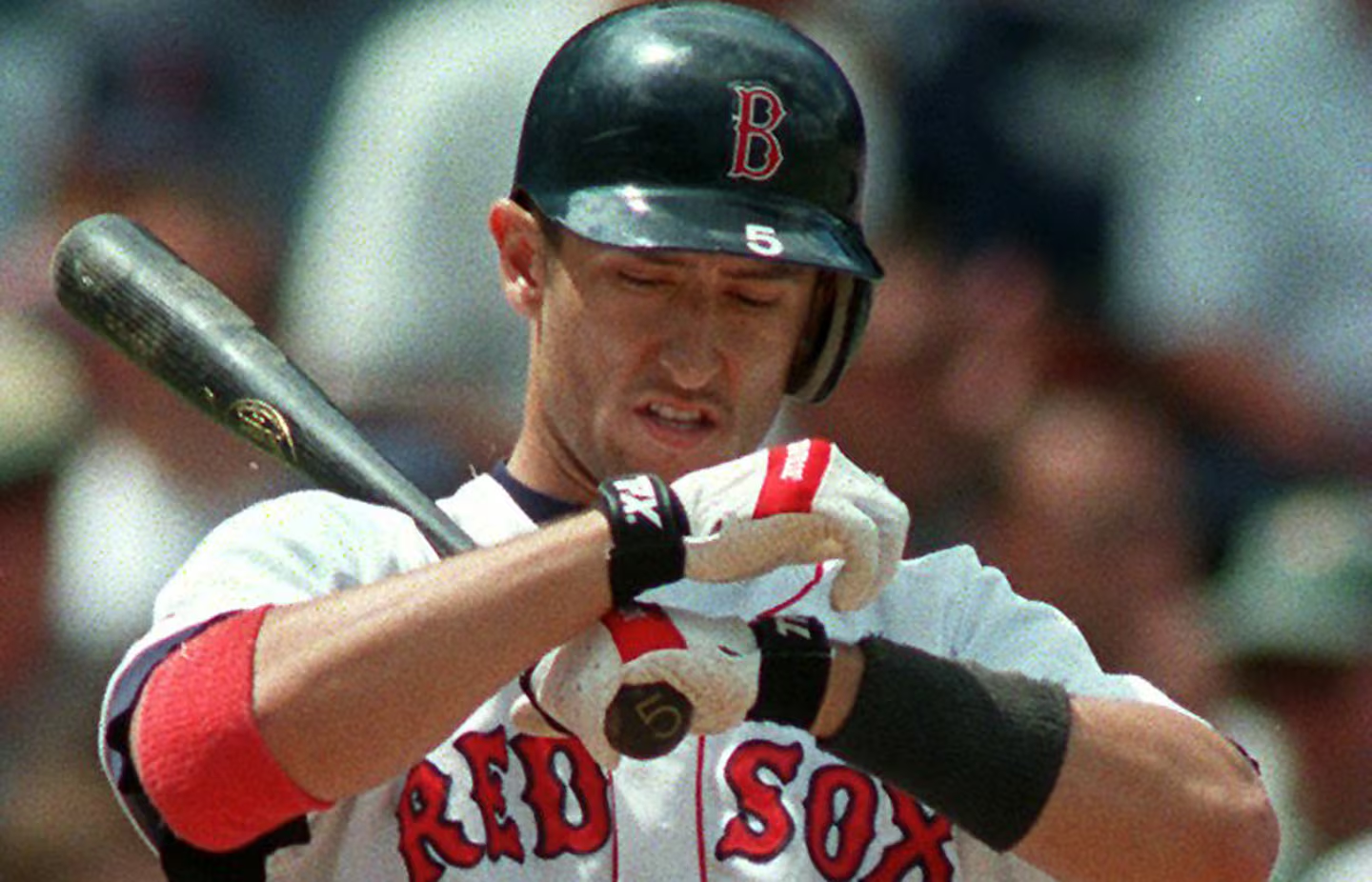
Nomar Garciaparra is a tough evaluation for the purpose of this list because, for a long time, he was not underappreciated in Boston at all. He was beloved.
From 1997 through 2003, he was the face of the Red Sox. You couldn't walk around Boston during those years without running into several #5 jerseys.
He won two batting titles, hitting .357 in 1999 and .372 in 2000, and for a brief stretch, he was one of the most feared hitters in baseball.
But Nomar also played in one of the greatest eras for shortstops in baseball history, and that complicated his legacy.
Alex Rodriguez was putting up video-game numbers and seemed headed toward 700 home runs. Derek Jeter was collecting championships with the rival Yankees and building an October mythology reputation that garnered him the nickname, The Captain. Miguel Tejada never missed a game, had five consecutive 100 RBI seasons, and won the American League MVP in 2002 with Oakland.
What ruined Garciaparra’s reputation in Boston was the way his Red Sox career ended. During the 2004 season, he appeared increasingly disconnected from the team, and nothing symbolized that more than the famous game in New York when he choose to sit out while Derek Jeter bloodied himself diving into the stands along the third-base line. The contrast of Jeter's bloodied nose with Garciaparra sitting on the dugout bench was a horrible look for Nomar.
At the trade deadline, Epstein shocked everyone—including an incredulous Nomar—when he traded away the face of the Red Sox franchise in a deal that brought back a handful of far less talented players, but badly needed defensive pieces, including Orlando Cabrera and Doug Mientkiewicz.
The 2004 season ended with Nomar in Chicago, watching the Red Sox do the one thing he had spent years trying to help them do: end the 86-year curse. That is why his legacy feels so strange. He was once the franchise’s most beloved player, but because he didn't get the team to the finish line—and with the way his career ended in Boston—Boston has, seemingly, forgotten how great he was for a span of six years during the greatest era, ever, for shortstops in the history of baseball.
#8 Bruce Hurst
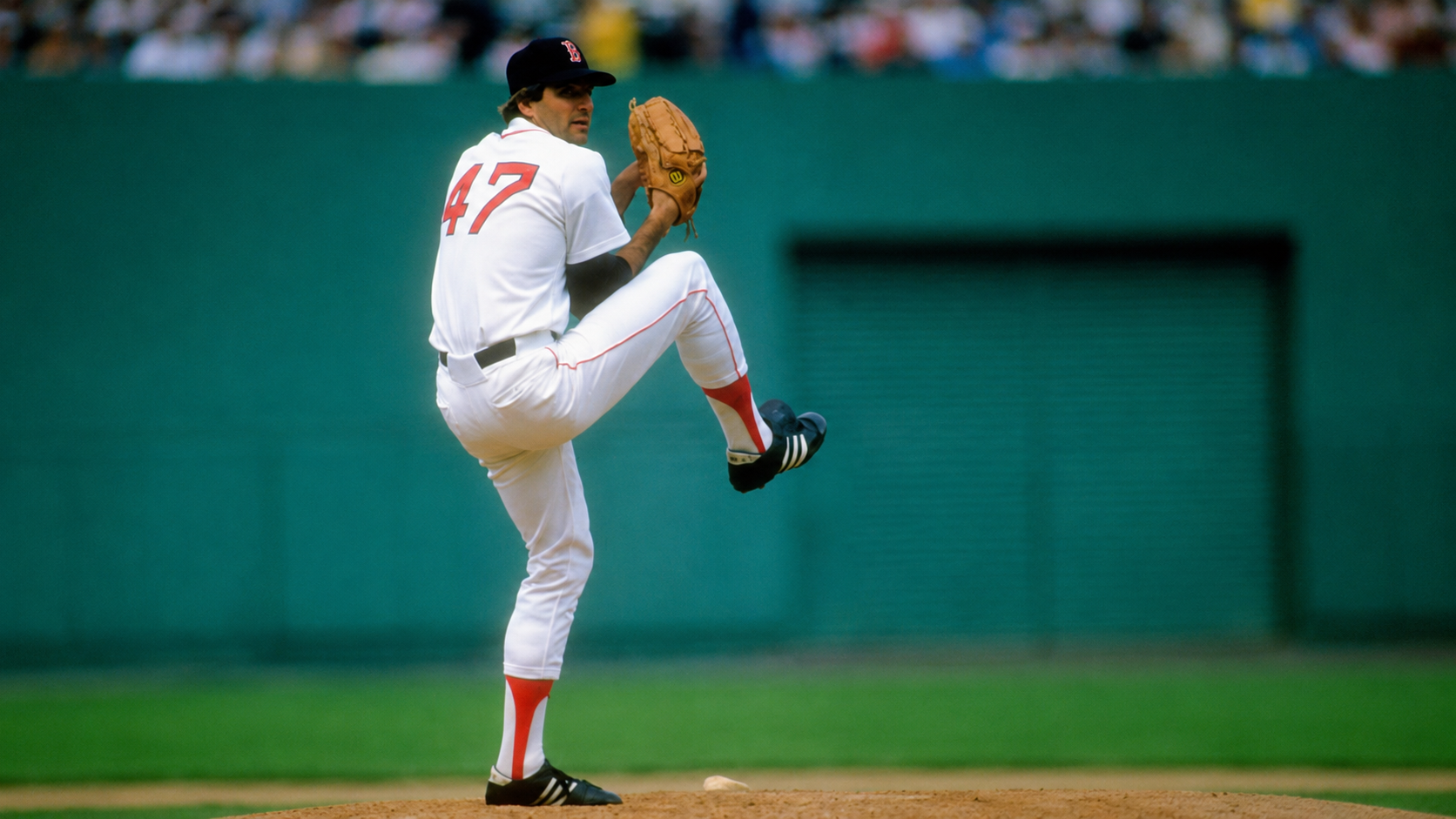
Bruce Hurst pitched for the Red Sox from 1980 through 1988, a durable left-hander with one of the best curveballs I have ever seen. But once Roger Clemens exploded on the scene in 1984, Hurst spent the rest of his Boston career in Clemens’ enormous shadow.
That is what makes Hurst so easy to overlook. When the Red Sox reached the World Series in 1986, Hurst had gone 13-8 with a 2.99 ERA in 25 regular-season starts. In the postseason, he was even better, going 3-0 with a 2.13 ERA. Hurst was in line to win the World Series MVP had the ball not gone between...
Clemens, by comparison, finished that postseason 1-1 with a 3.97 ERA in five starts.
Hurst was not re-signed after the 1988 season and instead left as a free agent for the San Diego Padres. In San Diego, he remained exactly what Boston should have wanted: a reliable, elite left-handed starter. Over his five seasons with the Padres, Hurst went 55-38 with a 3.27 ERA, proving that Boston management didn't appreciate him like they should have.
The Red Sox, meanwhile, never won more than 88 games in any season during Hurst’s time in San Diego. Hurst should have finished his career in Boston, forming a formidable one-two, left-right tandem with Clemens atop the Red Sox rotation.
#7 Drew Bledsoe
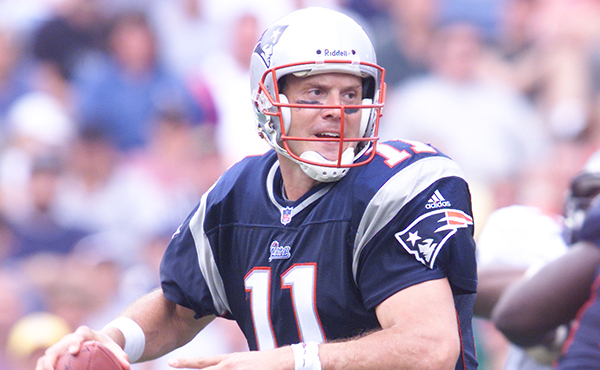
Drew Bledsoe’s stature in New England followed a similar trajectory to Nomar Garciaparra’s. For the first half of his career, he was idolized in New England. He was the face of the franchise, the No. 1 overall pick in 1993, and the prodigal son who was going to take New England to their first Super Bowl title. The Patriots had their Dan Marino.
In Bledsoe's second season, he was carrying the offense on his shoulders. In 1994, he led the NFL in completions, pass attempts, and passing yards, throwing for 4,555 yards at a time when those numbers still felt enormous.
Two years later, Bledsoe got the Patriots to the Super Bowl. It was an accomplishment made all the more impressive considering the franchise was on the verge of moving to St. Louis just prior to Bledsoe's arrival.
But even during his rise, Bledsoe had to share the spotlight. Bill Parcells’ enormous personality overshadowed everything. Parcells had the reputation, the Super Bowl rings, the press-conference performance, and the ego of a head coach who always made himself part of the story.
When the Patriots won, Parcells got most of the credit for changing the direction of the fledgling franchise. Bledsoe was the golden arm, but Parcells was considered the franchise savior.
If Bledsoe spent his early Patriots years sharing the spotlight with Parcells, he had no idea what the future held for him. After taking what ultimately proved to be a life-threatening hit from Mo Lewis early in the 2001 season, Bledsoe was replaced by Tom Brady. He would never get his job back.
Once Brady replaced him and the Patriots won their first Super Bowl, Bledsoe became a forgotten man. He was supposed to have been what Tom Brady went on to become.
When Bledsoe retired, he ranked seventh in NFL history in passing yards, fifth in completions, fifth in attempts, and thirteenth in touchdown passes — numbers that should have put him on the Mount Rushmore of Patriots' greats.
Heck, now when Patriots' fans think of #11, they think Julian Edelman, not Drew Bledsoe.
#6 Wes Welker
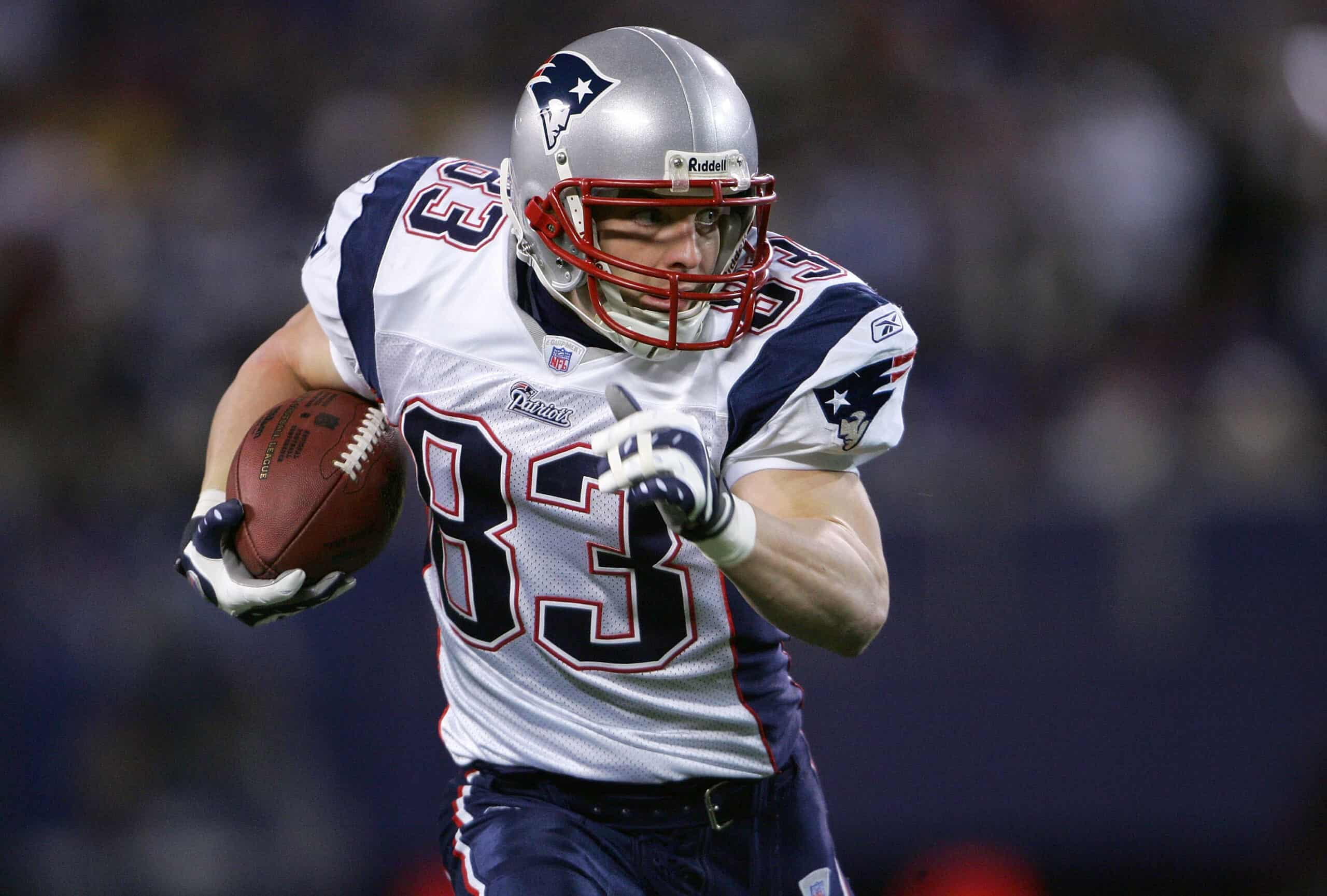
Julian Edelman also stole someone else's thunder on this list. Before Edelman became Brady's favorite slot receiver, Wes Welker was the one who revolutionized the position in New England.
Welker arrived in New England the same year as Randy Moss, which is another way he got overshadowed in his time here. Moss was one of the greatest—and flashiest—wide receivers to ever play the game. Moss was the highlight reel receiver who was routinely seen every week on SportsCenter on his way to catching a record 23 touchdowns in 2007.
Welker was the chain-mover. He was the one that moved the ball methodically between the 20s to get Brady and Moss in position to connect in the red zone. He was the one that made the tough catches over the middle knowing he was going to take big hits.
All Welker did, while with New England, was lead the NFL in receptions three times.
Sadly, the lasting memory for many Patriots fans is the “drop” late in Super Bowl XLVI against the New York Giants. I have always thought that label was unfair. Brady’s throw was a little behind Welker, over the wrong shoulder, and into a tight window. Could Welker have caught it? Sure. He got both hands on the ball. But nobody was going to blame Brady, so Welker became the easy target. A year later, Welker was gone. A decade later, Edelman had people asking, "Wes who?"
#5 Koji Uehara
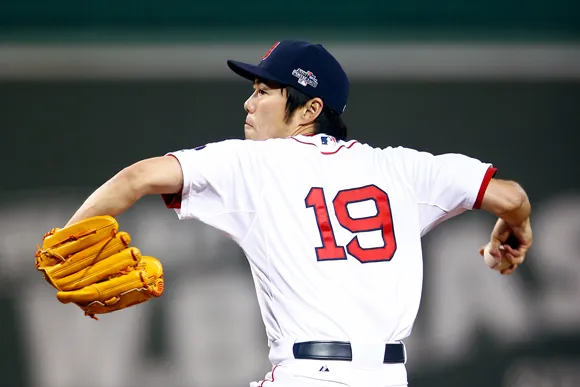
Koji Uehara’s 2013 season remains the best season I have ever seen from a closer. For a few months, he was absolutely unhittable. You couldn’t even get up to go to the bathroom when Uehara was warming up without risking missing the entire ninth inning. I have never seen someone work so fast and so effectively. Ten pitches, five minutes, handshakes, high fives. The game was over.
Uehara didn’t possess a high-90s fastball like Jonathan Papelbon. He didn’t stand 6-foot-5, and he didn’t have Papelbon’s over-the-top personality, either. Koji was about fifty pounds lighter, much quieter, and far less imposing on the surface. But once manager John Farrell handed him the ball, he was an assassin. He just climbed on the mound, worked fast, and mowed hitters down.
He finished the 2013 regular season with a 1.09 ERA, a 0.57 WHIP, and 101 strikeouts against only nine walks in 74.1 innings. He wasn't even the first, second, or third choice for being the Red Sox closer that season. Once he replaced current Red Sox pitching coach Andrew Bailey as the closer in June, the Sox closer problems were solved.
In the 2013 postseason, he allowed one earned run in 13 2/3 innings, won the ALCS MVP, and recorded the final out of the World Series. In a city that has seen plenty of great postseason pitching moments, Uehara’s entire October felt like one long exhale.
In this town, when Red Sox fans think of a closer, they usually think of Jonathan Papelbon first. He was loud, dominant, homegrown, and quotable — and he has remained visible in Boston, even working in studio pre- and post-game for NESN. Many fans may even think of Keith Foulke before Uehara, because Foulke recorded the final out in 2004 and helped snap the 86-year curse. But Koji was better than both at his absolute peak. Papelbon had the bigger fastball and personality. Foulke had the more historical moment. But Uehara had the most dominant season of any Sox closer ever. And it kind of goes forgotten how absolutely dominating he was.
#4 Kevin McHale
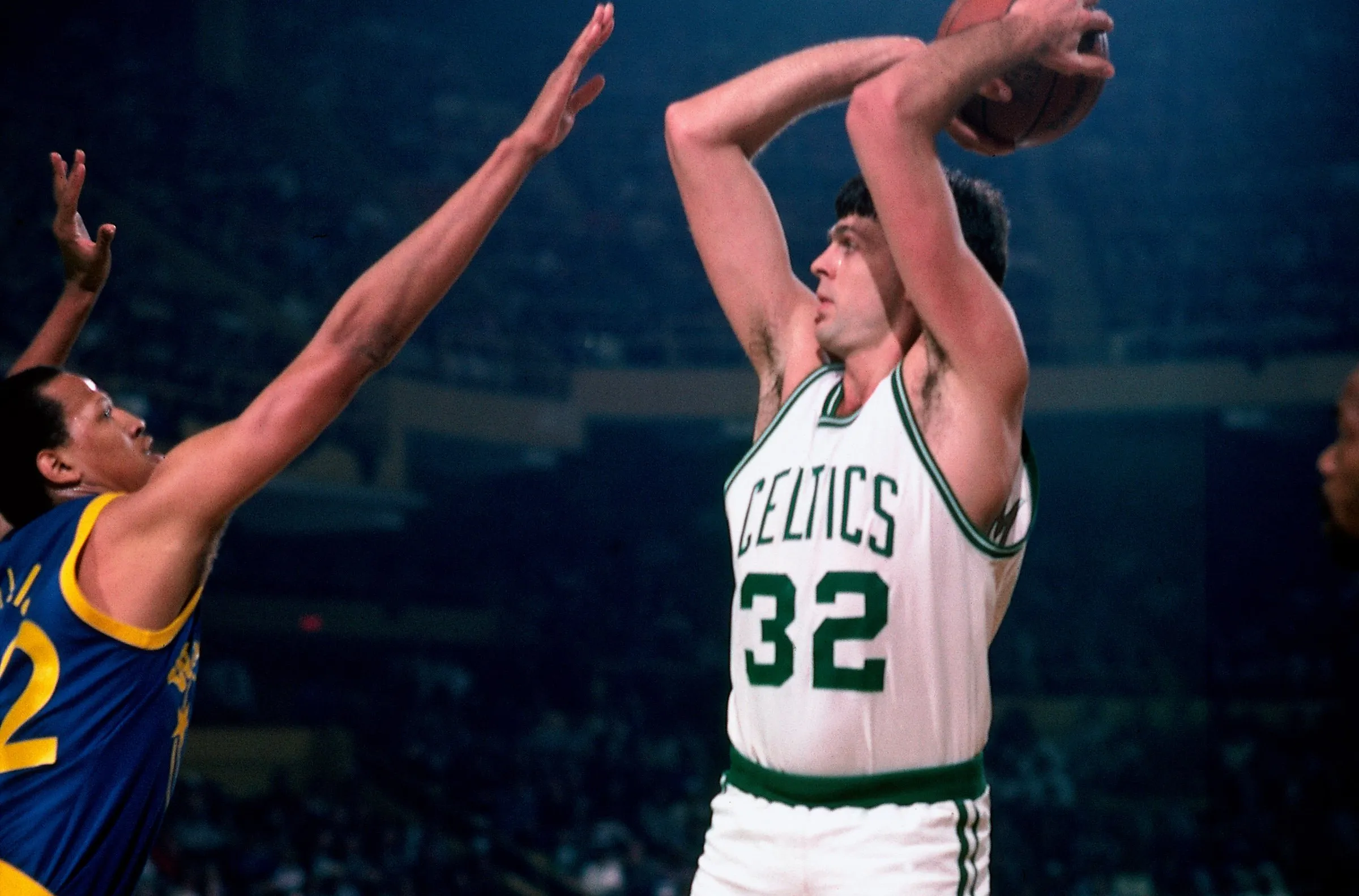
Kevin McHale is a Hall of Famer, a seven-time All-Star, a three-time NBA champion, a two-time Sixth Man of the Year, a six-time All-Defensive selection, and a member of the NBA’s 75th Anniversary Team. He averaged 17.9 points and 7.3 rebounds for his career while shooting 55.4 percent from the field, numbers that only begin to explain how dominating of an all-around low-post player he was.
As a kid, I studied his low post footwork, his pump fakes, and his dipsy-do moves. It was like watching a ballerina making defenders look silly as he played them like a puppeteer. I may have been able to replicate his moves, but I could not replicate how extraordinarily long his arms were. His release point was ridiculously high. And when he was defending you, he made it almost impossible to shoot over him.
In his best season, 1986-87, McHale averaged 26.1 points and 9.9 rebounds while shooting an absurd 60.4 percent from the field. He finished fourth in MVP voting, made First-Team All-NBA, and was also selected First-Team All-Defense.
But McHale played with Larry Bird—one of the best and most competitive players to ever grace a basketball court. Bird embodied Boston's blue collar work ethic. His snide remarks and cocky attitude enamored Bird to his fans. Bird not only talked the talk, but he walked the walk. Bird had the fancy behind-the-backboard shots, no-look passes, automatic three-point shot, and buzzer-beaters. He dove for loose balls. He even tried choking Dr. J once. He fought Bill Lambier– the Detroit Pistons center who everyone loved to hate. Plus Bird had the cool name.
McHale was more cerebral, methodical, and well-spoken. He was a tactician. He could have a sharp tongue, as well, but there were always more reporters gathered around Bird's locker to notice what McHale was saying.
The most famous example of Bird always one-upping McHale came in March 1985. McHale scored 56 points against the Pistons, setting a new Celtics single-game scoring record. Bird reportedly told him to enjoy it while it lasted. Nine days later, Bird went out and scored 60 against the Hawks, taking the record back almost immediately. Bird didn't let McHale enjoy that one moment in the Celtics' record books for not even two weeks. It was yet another example of a McHale accomplishment being taken away from McHale and converted into another chapter of the Bird mythology.
#3 Jaylen Brown
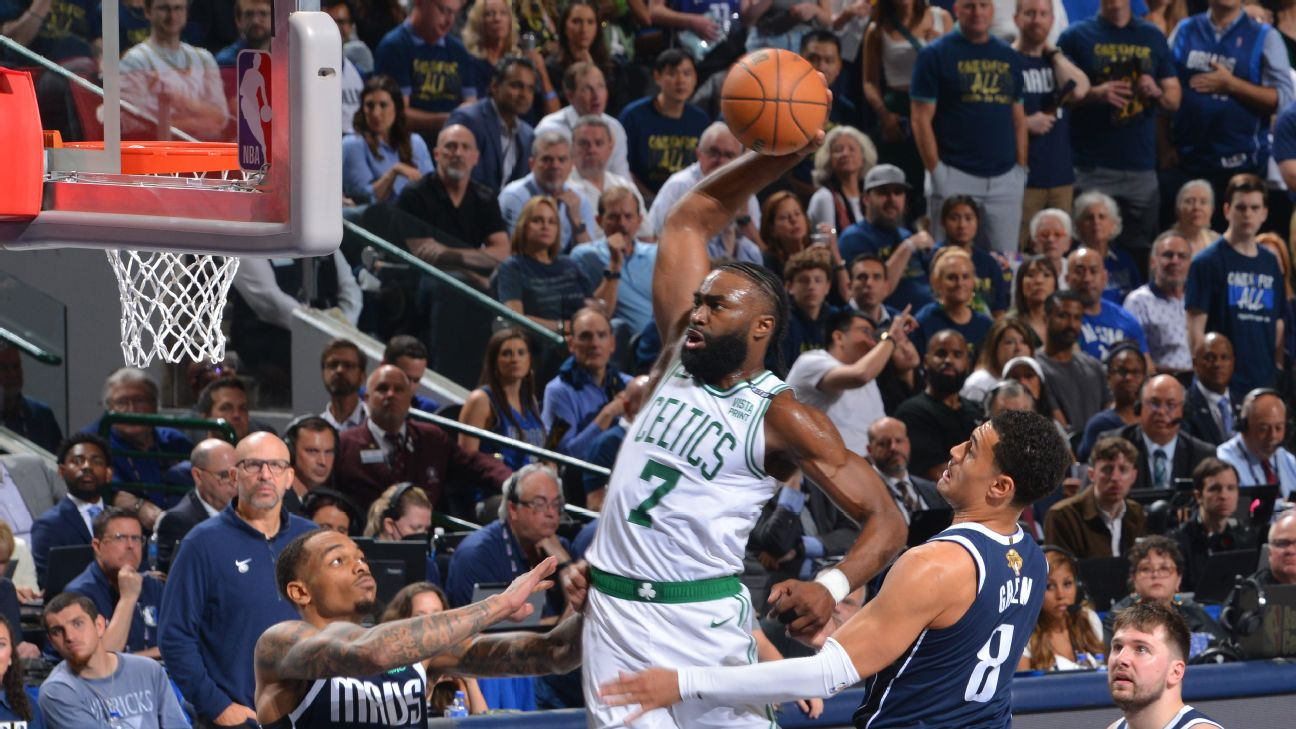
Jaylen Brown was my inspiration for this entire list because he is the best current example of a Boston superstar being underappreciated by his fanbase. And it sickens me.
As I write this, I am listening to Marc Bertrand on 98.5 The Sports Hub saying that a Giannis Antetokounmpo-for-Jaylen Brown deal would only be the first piece in a complete Celtics' roster overhaul this summer, and that "the only person that is safe is Jayson Tatum."
Brown has always been the one to blame around these parts when things go bad with the Celtics. Either he misses clutch free throws. Or he dribbles the ball off his leg. Or he shoots the ball too much.
But that is because Brown does not shy away from the big moments. He is a fiery competitor. Much more so than Tatum—and it's not even close.
Yet Tatum is the "untouchable" one on the roster?
It absolutely amazes me how Jayson Tatum always gets a free pass from the Boston media and fans. Brown's competitiveness is far closer to Larry Bird's will to win than Tatum's.
Tatum is the one who puts up a hand signal every time he hits a three-pointer. Tatum is the one who makes a LeBron-like production at the scorer's table, pre-game, of looking at the crowd and pulling at his jersey number as if to say, "Look at me. Let's go!"
Tatum is the one who complains every time he misses a shot that he must have gotten fouled—as if that's the only explanation for why he misses a shot. You hardly ever see any teammates come over to Tatum on the court after he makes a shot. In my book, Tatum is all "me, me, me."
Brown, on the other hand, does none of that. Alright — he might complain every once in a while about not getting foul calls, but I believe he has a case almost every time. I've never seen an elite NBA player of Brown's caliber not get legitimate foul calls called against him. There are very few times I see Brown complain where I am like, "Just shut up, Jaylen." Now Tatum, on the other hand, at least 90% of the time I feel like telling him to shut up.
Tatum also gets all these high-profile endorsements. It's obvious he is all about his own brand, and he doesn't have any allegiance to the Celtics. You see Tatum everywhere advertising for sneakers, beverages, sandwich shops, and video games. He has no shame in including his little son in commercials with him.
Brown is nowhere near as visible in commercials, instead choosing to make a difference in communities in, and around, the city of Boston. He has invested himself in the city, from the 7uice Foundation to the Bridge Program with Boston students and MIT, to Boston XChange and his push to create opportunity and generational wealth in underserved communities.
Yet Tatum continues to get all the love in this city.
The irony is that Brown—not Tatum—is the one who won both the Eastern Conference Finals MVP and NBA Finals MVP the one year the Celtics did not underachieve and, actually, won the NBA championship in the Brown-Tatum era.
#2 Marvin Hagler
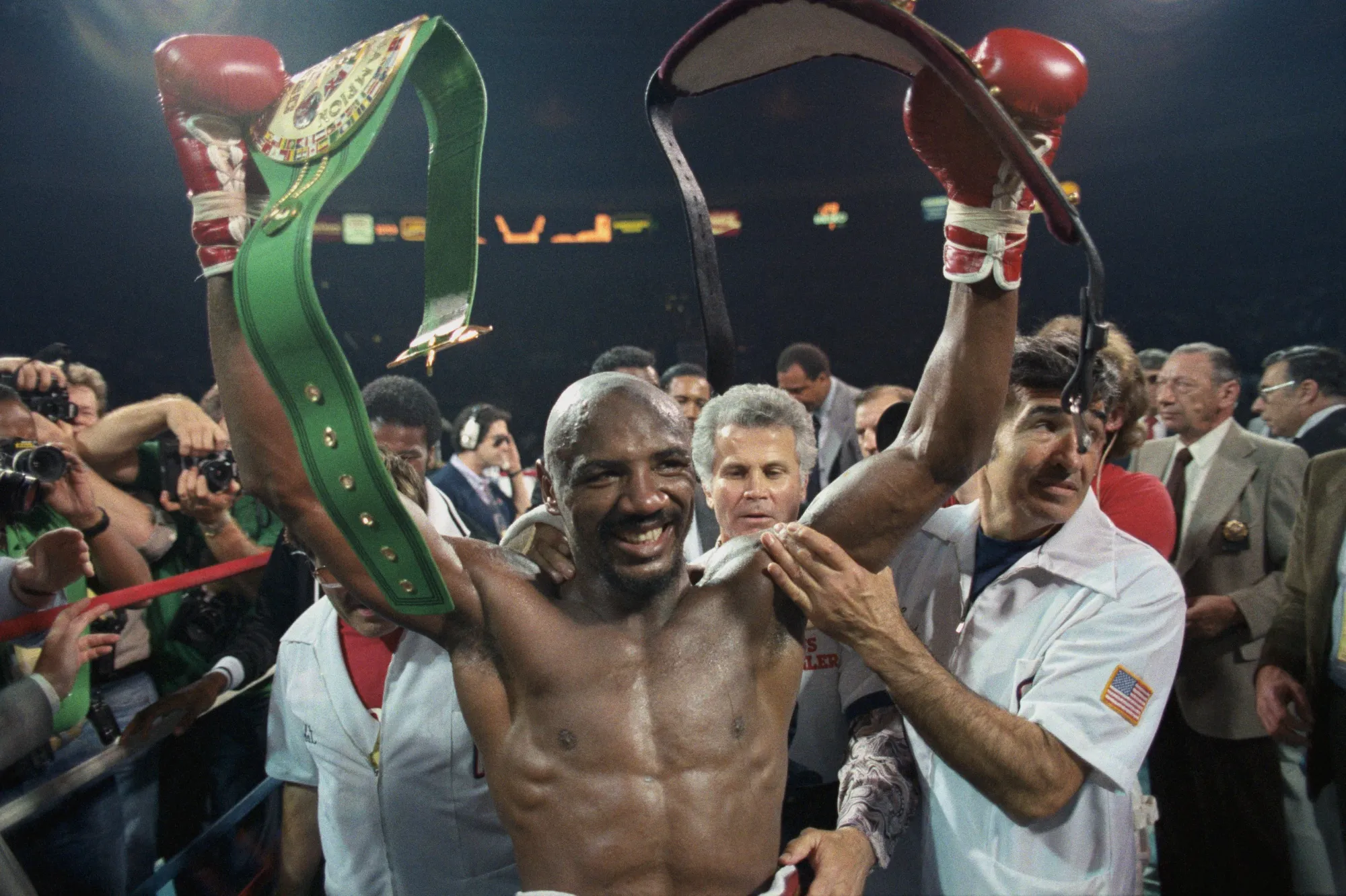
Born in Newark, New Jersey, but raised and molded as a fighter in Brockton, Massachusetts, Marvin Hagler became one of the toughest and most accomplished athletes ever to call the Bay State home. Yet despite a career that included a 62-3-2 record, 52 knockouts, and 12 successful defenses of the undisputed middleweight championship, Hagler is often overlooked when Boston sports fans debate the region's all-time greats.
Part of the reason was timing. Hagler competed during one of boxing's golden eras, sharing the spotlight with charismatic superstars such as Sugar Ray Leonard, Roberto Duran, and Thomas "The Hitman" Hearns.
Leonard's dazzling smile and marketing appeal made him a household name. Duran and his "Hands of Stone" captivated fans around the world. Hearns possessed electrifying knockout power and an all-or-nothing style that appealed to boxing fans.
Amid those colorful personalities, Hagler was the quiet, blue-collar warrior who preferred hard work over self-promotion. He rarely sought the spotlight until later in his career when he felt like his legacy was being disrespected.
But it wasn't Leonard, Duran, or Hearns who dominated the middleweight division for close to a decade. Few Boston athletes have ever been the undisputed best in their sport for as long as Hagler was.
Hagler won the undisputed middleweight championship in 1980 and held it until 1987, a reign of more than seven years. During that time, he defended the title 12 consecutive times and was widely regarded as the man to beat in boxing's deepest division.
His legendary battles against Hearns and Duran remain among the greatest fights ever staged. His controversial split-decision loss to Sugar Ray Leonard in 1987 remains was egregious and serves as Exhibit A for those who believe Hagler never received the respect he deserved.
Many, including myself, felt the longtime champion did enough to win the fight. Leonard periodically dazzled judges and fans with the quick combination flurries that made him famous, but much of the bout was fought on Hagler's terms. Leonard spent long stretches circling and retreating while Hagler pressed the action, stalked forward, and landed the more meaningful punches. To Hagler's supporters, the decision reflected boxing's preference for Leonard's flash and marketability over the champion's relentless aggression and ring control.
The greatest opening round in the history of boxing—Thomas "Hit Man" Hearns against "Marvelous" Marvin Hagler in 1985.
#1 Dwight Evans
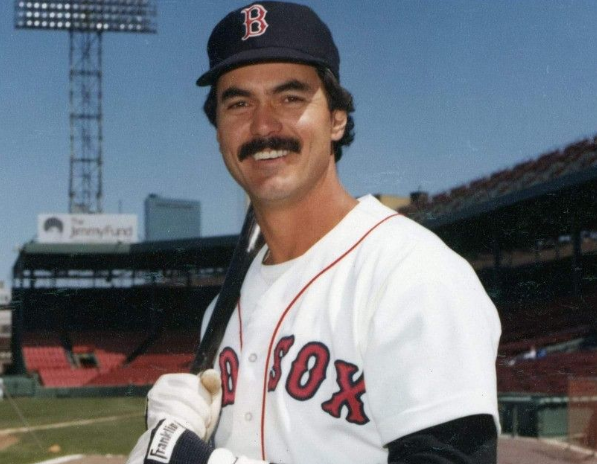
Topping the list of most underrated Boston sports athletes is "Dewey" Dwight Evans. In fact, he may be one of the most underrated athletes in baseball history, not just Boston.
Spending all 19 of his major league seasons with the Red Sox, Evans quietly built a résumé that compares favorably with many Hall of Famers in Cooperstown.
Evans was the complete package. He won eight Gold Gloves in right field, possessed one of the strongest throwing arms in baseball, hit 385 home runs, drove in 1,384 runs, and finished his career with a .370 on-base percentage.
Evans may have been ahead of his time. In today's game, he would be a darling of the analytics community. While traditional statistics painted him as a very good player, modern metrics reveal just how valuable he truly was. His combination of power, plate discipline, defense, durability, and one of baseball's strongest outfield arms made him one of the most complete players of his era. His career WAR ranks ahead of numerous outfielders already enshrined in Cooperstown,
There is no debate, in my mind, that no one has ever patrolled right field in Fenway Park better than Dwight Evans. Along with Jim Rice and Fred Lynn, the trio formed the greatest outfield in Red Sox history.
Evans also had Hall of Famer Carl Yastrzemski as a teammate for the first ten years of his career.
Evans' defining moment came in Game 6 of the 1975 World Series when he made a spectacular leaping catch near the precariously short wall in right field at Fenway, and had the awareness to spin and throw to first base to double off Cincinnati's Ken Griffey Sr., preserving a tie game and helping force extra innings before Carlton Fisk's legendary home run. Yet even that iconic play is often overshadowed by Fisk waving the ball fair moments later.
In many ways, that sequence perfectly embodies Evans' career. He consistently made winning plays, produced at an elite level, and contributed to some of the greatest moments in Red Sox history, yet someone else usually received the credit. Nearly three decades after his retirement, Dwight Evans remains not only one of the most underrated players in Red Sox history, but arguably the most underrated athlete Boston has ever produced.
Honorable Mentions:
The one name I kept going back and forth on including in the top ten is Robert Parish. Sometimes I thought of putting him as high, no pun intended, as #8, but he ends up being just outside my top ten. He was such a steady influence on the Bird-McHale championship teams. They didn't call them the Big Three for nothing.
Other players that deserve mentioning:
Vincent Brown, linebacker, New England Patriots 1988-1995
Dennis Johnson, point guard, Boston Celtics, 1983-1990
Stanley Morgan, wide receiver, New England Patriots, 1977-1989
Curt Shilling, pitcher, Boston Red Sox, 2004-2007
Rajon Rondo, point guard, Boston Celtics, 2006-2014
Mookie Betts, outfielder, Boston Red Sox, 2014-2019
Steve Nelson, linebacker, New England Patriots, 1974-1987
Cedric Maxwell, forward, Boston Celtics, 1977-1985
Kevin Youkilis, third baseman, Boston Red Sox, 2004-2012
Raymond Clayborn, defensive back, New England Patriots, 1977-1989
Bill Mueller, third baseman, Boston Red Sox, 2003-2005