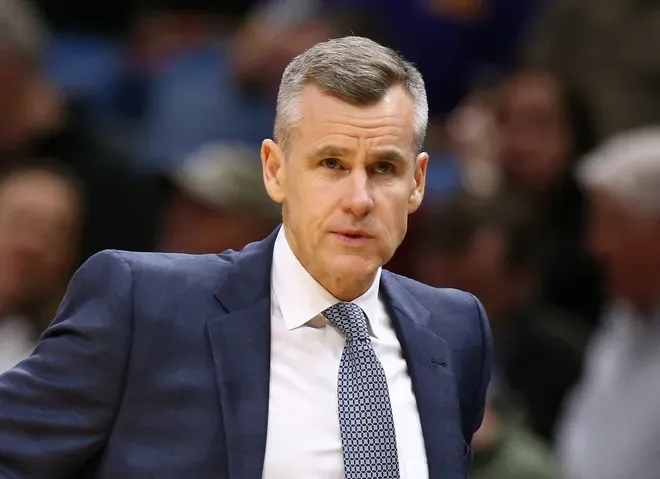
Did Brad Stevens Hint the Celtics Need a Coaching Change?
Joe Mazzulla helped keep the Celtics competitive during a transitional season, but Brad Stevens’ end-of-year press conference raised serious questions about his future as head coach of the Boston Celtics.

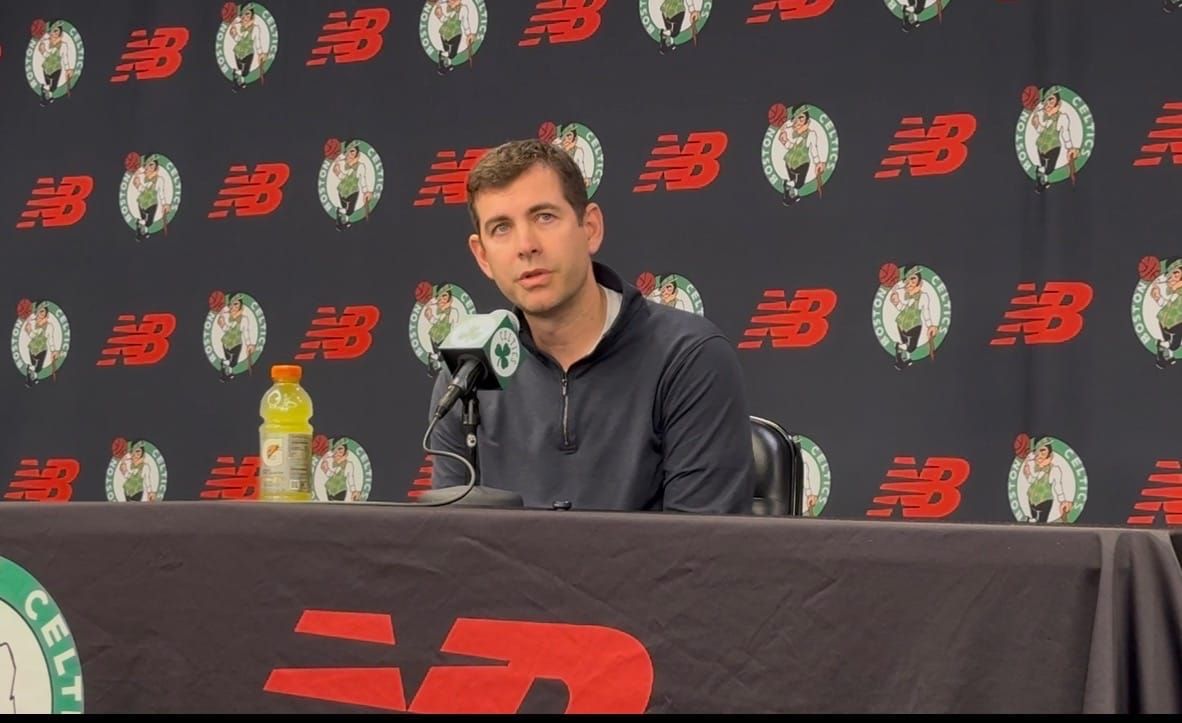
Boston Celtics President of Basketball Operations Brad Stevens held his end-of-season press conference Wednesday morning. There were important things he said — and perhaps even more importantly, things he didn’t say.
I listened to the press conference with one focus in mind: the future of 37-year-old head coach Joe Mazzulla.
By the end of it, I walked away convinced Stevens may be questioning whether Mazzulla can truly take this team to another level.
Expectations Changed
When Jayson Tatum tore his Achilles during last year’s playoffs, most people assumed the Celtics would take a step backward in 2025-26.
Stevens traded away Kristaps Porzingis, Jrue Holiday, and Xavier Tillman. Boston also lost important veteran contributors in free agency, including Al Horford and Luke Kornet.
Those departures left major holes:
- Holiday, Horford, and Tillman provided maturity and leadership
- Horford, Kornet, and Porzingis gave the Celtics much-needed size
- Holiday, Porzingis, and Tillman brought defensive versatility
- Holiday, Porzingis, and Horford added scoring and floor spacing
- Tillman supplied toughness and physicality
The expectation was that 2025-26 would be a lost season.
Instead, the Celtics won 56 games and earned the No. 2 seed in the Eastern Conference. Even more surprising, Tatum returned ahead of schedule and played the final 16 regular-season games.
That changed everything.
“If you had told me before the season that we would win this many games and finish where we did, I think everybody would have signed up for that,” Stevens said. “But expectations changed as the season went on.”
That quote mattered.
Stevens was acknowledging that the Celtics evolved from a rebuilding team into a legitimate championship contender.
And once that happened, everything changed.
The Embiid Problem
Jaylen Brown carried the Celtics through much of Tatum’s absence and played at an MVP-caliber level. Once Tatum returned, Boston once again looked like a legitimate title threat with one of the league’s best star duos.
Then Joel Embiid returned.
After taking a 3-1 series lead against the Philadelphia 76ers, Boston appeared poised for another deep playoff run. But Embiid returned in Game 4—just 17 days after an emergency appendectomy, and the series completely shifted.
Celtics head coach Joe Mazzulla failed to adjust.
Embiid later commented that Boston failed to change its approach once he returned to the floor. He even referenced comments made earlier in the series by Payton Pritchard, who said the Celtics would play the same way regardless of whether Embiid played.
That mindset proved disastrous.
Embiid is a former MVP who averaged 33.1 points and 10.2 rebounds during his MVP season. He is a dominant seven-footer who has very unique skills that require changing matchups and game plans.
Yet Boston’s response at times was to have 6-foot-6 Jaylen Brown defending him in the post.
Meanwhile, Nikola Vucevic — acquired midseason specifically to strengthen Boston’s frontcourt — barely factored into the series and never stepped on the floor in Game 7.
Playoff basketball is about adjustment.
Philadelphia adjusted its style of play when Embiid returned. Boston didn't have any answers, nor did they try to answer.
Stevens addressed the matchup afterward by saying the Sixers were “a tough matchup for all of us,” before awkwardly pointing out that Vucevic, technically, finished as a statistical plus-player in the series.
That little "throw-in" felt like a shot.
Embiid closed out Game 7 with 34 points and 12 rebounds as Philadelphia completed the comeback from a 3-1 deficit — the first time in Celtics history the franchise lost a playoff series after leading three games to one.
Boston had previously been 32-0 in those situations.
Frustration With the Offense
Joe Mazzulla has long defended the Celtics’ heavy reliance on the three-point shot. In previous losses, when asked whether the team settled too often for threes, Mazzulla defiantly countered that he didn’t believe they shot enough of them.
That philosophy didn't sound shared by Stevens on Wednesday.
When Stevens was asked whether the organization needed to diversify the offense, he called the question “really fair.”
That raised my eyebrows immediately.
“My general feeling watching us play, really in each of the last two playoffs,” Stevens said, “we had a hard time generating really good looks on that first shot.”
He later added:
“We’ve got to figure out a way to do better with that.”
Stevens repeatedly mentioned wanting more dunks and free throws instead of difficult three-pointers.
That didn't sound like criticism of the roster. That sounded like a critique on the coaching.
At one point Stevens admitted Boston often struggled “to get where we really wanted to go,” while visibly frustrated discussing the team’s inability to consistently create quality shots in playoff situations.
For a franchise built around analytics and spacing, that was significant.
Home Court Advantage?
One reporter pointed out that under Mazzulla, the Celtics have now lost three playoff series as the higher seed.
Stevens immediately nodded.
The Celtics went 9-1 at home during their championship run in 2023-24. Outside of that season, however, they are just 10-9 at TD Garden during the other three playoff runs under Mazzulla.
Even more alarming, all three eliminations came at home.
That would have been unimaginable during the Larry Bird era.
Stevens called the question “legitimate” before diving into specific moments from each playoff collapse. His memory for details is remarkable, and he repeatedly referenced situations where the Celtics appeared to relax once momentum swung in their favor.
Stevens specified the problem as struggling with “prosperity within the game," as opposed to the reporter's supposition of the team's inability to adapt to overall success.
In other words: complacency.
He emphasized Boston must become more “dialed in” and “locked in” when protecting leads.
Then came perhaps the most revealing moment of the entire press conference.
Stevens pointed to Game 5 against Philadelphia — a home game in which Boston should have hammered the nails in Philly's coffin.
The Celtics led by 15 points late in the third quarter. Then the game unraveled.
Philadelphia hit several quick threes, momentum flipped, and Boston didn't respond. The Celtics' lack of focus at the end of the third quarter may have been the turning point in the series.
“Those are things we need to get better at.”
“That is a big talking point, for sure.”
What Stevens Didn’t Say
It took nearly twenty minutes before a reporter finally asked Stevens directly about Mazzulla’s future.
Stevens praised the coaching staff for player development and credited them for helping younger players improve.
Then came the key line:
“I think our coaching staff, like all of us, can continue to improve and get better. That said, I think they are very good.”
Very good. Not terrific, or amazing—words Stevens likes to use when he is, genuinely, impressed.
Just “very good.”
Stevens repeatedly used much stronger language elsewhere in the press conference when discussing things he truly admired — including the medical and training staff responsible for Tatum’s recovery.
At no point did Stevens mention Mazzulla’s in-game coaching, playoff adjustments, or late-game management.
That omission mattered.
The NBA Has Seen This Before
The NBA is filled with examples of coaches who were good enough to elevate teams to the playoffs — but not good enough to elevate them to a championship level, consistently.
Doug Collins (as did drafting Michael Jordan) helped build the Bulls from a lottery team to a playoff team, but it took Phil Jackson to finally get the Bulls past the Detroit Pistons and to win championships.
Del Harris was a veteran assistant coach prior to taking over as head coach of the Lakers. Harris helped rebuild the Lakers but it, again, took Phil Jackson to elevate Kobe Bryant and Shaquille O’Neal into champions.
Mark Jackson helped give credibility to a Golden State Warriors' franchise that had floundered for decades, but it took a fresh face in Steve Kerr to help Steph Curry win rings.
Joe Mazzulla deserves credit. But let's call it what it is. Mazzulla is more Mark Jackson than Phil Jackson.
Mazzulla kept Boston competitive during what was supposed to be a transition season. He has developed young players well. He clearly connects with portions of the roster.
But eventually the question becomes unavoidable:
Has he already taken this group as far as he can?
Final Thoughts
Right now, much of the attention in Boston is focused on Jaylen Brown’s future.
That misses the larger issue entirely.
Brown was not the reason the Celtics failed this season. He was the reason they were contenders in the first place.
The larger issue is whether this team has gone as far as it can with Mazzulla at the helm.
Brad Stevens may not have said that outright Wednesday morning.
But if you listened carefully — and watched closely — it certainly feels like he is beginning to wonder the same thing.
And if the Celtics ultimately decide they need a more experienced voice to push this roster forward, one name worth watching is Billy Donovan.