
Boston “Massacre”: Red Sox Fire Alex Cora and Coaching Staff

Not many people realize only five people were killed in the Boston Massacre in 1770.
On Saturday, April 25, 2026—256 years and one week later—five Boston Red Sox coaches were fired, along with their field general, manager Alex Cora.
As per usual with Red Sox transactions, the timing was odd.
The Sox had just finished a 17–1 demolition of the Baltimore Orioles—their most explosive offensive performance of the young season. By all accounts, Cora was in good spirits after the game.
Then came the ambush.
According to MassLive’s Chris Cotillo, Cora returned to the team hotel to find Sam Kennedy and Craig Breslow waiting for him. No one even knew they were in town. You can imagine the shift in body language when he saw them—like spotting the Grim Reaper in the lobby.
The next morning, Breslow addressed the media and said the decision had been made earlier that day. Which makes the scene even stranger to picture: ownership and the front office watching the Red Sox pile up run after run… already knowing the manager was gone.
Along with Cora, Boston dismissed hitting coach Peter Fatse, assistant hitting coach Dillon Lawson, bench coach Ramón Vázquez, third base coach Kyle Hudson, and hitting strategy coach Joe Cronin. Jason Varitek was reassigned to a different role.
Did Cora Deserve It?
My one-word answer: yes.
But not because of anything that happened this week.
If anything, the decision came two years too late.
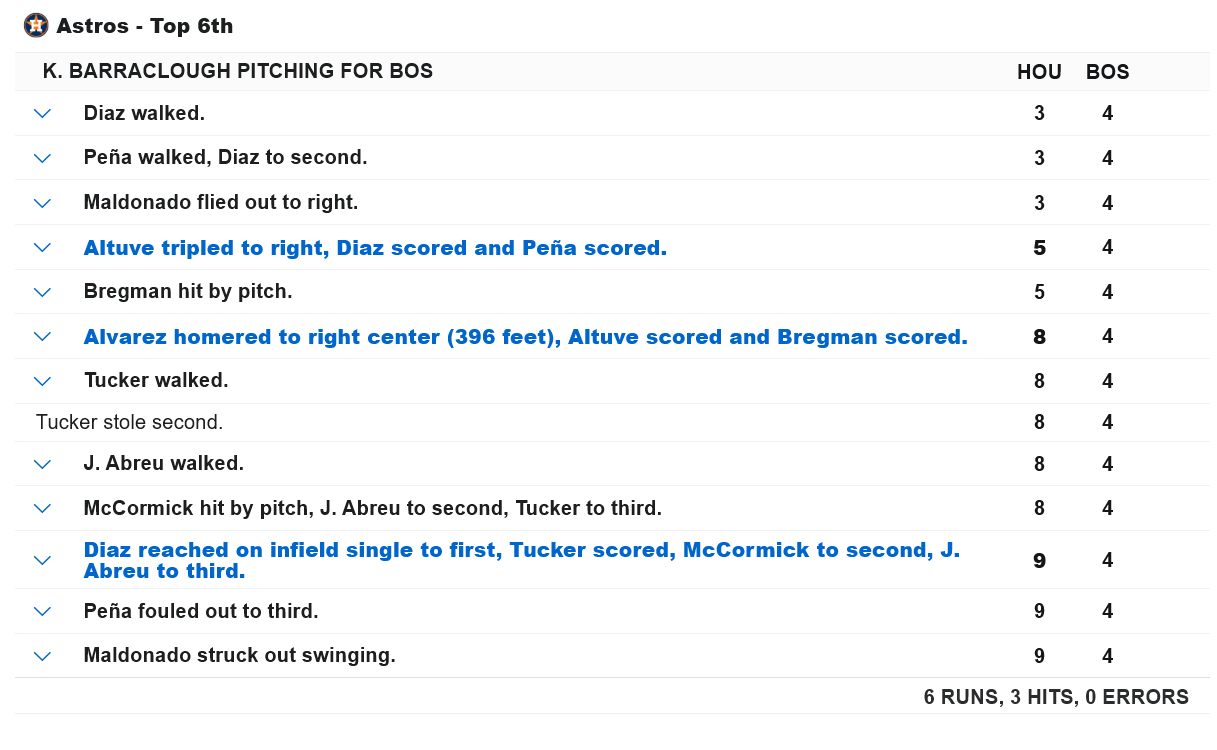
My faith in Cora shifted during a game at Fenway Park in August 2023. The Red Sox were clinging to postseason hopes, chasing a Wild Card spot, when journeyman reliever Kyle Barraclough came on in relief—in a one-run game—of Chris Sale.
He got through the fifth. Then everything unraveled.
Cora never got anyone up in the bullpen.
Barraclough stayed in as the inning spiraled, then stayed in again the next inning. What should have been a quick hook turned into a prolonged collapse. By the time it ended, the game—and realistically the season—felt over.
Barraclough’s final line that night was brutal:
4.1 IP, 11 H, 10 ER, 3 HBP, 2 HR allowed, and 94 pitches.
It turned out to be the last appearance of his major league career.
That wasn’t just a bad managerial decision. Cora is too smart for that.
It felt like something else entirely—a message.
It felt like a big "F-you" to then-general manager Chaim Bloom, Red Sox President & CEO Sam Kennedy, and Principal Owner John Henry for not investing in the team.
It was as if Cora was daring the organization to do something. To invest. Acquire some serious big-league talent. Show they care about winning. Maybe even daring them to fire him.
They did none of the above that summer of 2023.
But from that point on, the clock started ticking towards the end of Cora's time with the Red Sox.
Is Cora a Bad Manager?
No way.
Alex Cora knows baseball as well as anyone in the game. He grew up in it. His father, José Cora, played and coached professionally. His brother, Joey Cora, had a long major league career.
Cora himself carved out a 14-year career as a smart, versatile player, including four seasons in Boston and a World Series title in 2007.
Then he returned as manager in 2018—and won a title in his first season.
That doesn’t happen by accident.
Cora was hired by Dave Dombrowski. Dombrowski is a baseball lifer who believes in winning now— spend ownership's money and invest in proven, accomplished veteran players. He viewed prospects as just that—prospects. Unproven.
When the team struggled in 2019. ownership didn't want to write the checks Dombrowski demanded, anymore.
Dombrowski was out. Henry looked to Tampa Bay. He coveted the way they competed, year-in and year-out, with a small budget.
He dipped into their front office and hired Chaim Bloom—who is eight years younger than Cora, never played professional baseball, and never ran an organization before.
Then came Breslow in 2023. Like Bloom, Breslow earned a degree from Yale. Breslow carved out a lengthy career as a lefty specialist reliever, but had only been an executive for four years before becoming Red Sox GM.
Breslow is five years younger than Cora.
Both Bloom and Breslow believe in building a franchise from the ground up. They shared the same philosophy of building the farm system—not to use the prospects as trade chips, but to have them as insurance to replace higher-priced major leaguers.
That's how the disconnect with Cora and the front office began.
Cora didn't have time to groom young players and deal with their growing pains. Cora, recently, expressed his disappointment and frustration that modern day players arrive to the big leagues not properly prepared in the fundamentals of the game.
For a baseball traditionalist like Cora, this was unacceptable.
Should Breslow Have Been Fired Also? Or Instead?
Absolutely, unless...
Is Breslow simply executing ownership’s plan. Because if he is, then firing him changes nothing.
Nothing on Breslow’s résumé with the Red Sox looms larger than how he handled Rafael Devers. If nothing changes, it is what Breslow will be remembered for.
In January 2023—prior to Breslow's hiring—John Henry and Devers agreed to a 10-year, $313 million contract extension. Two years later, Breslow signed Alex Bregman to play third base.
Devers became frustrated as he was moved off third base, shifted into a DH role, and later asked to play first base.
The Red Sox then dealt Devers to San Francisco in a deal that had everyone shaking their heads.
The main pieces in return from San Francisco were pitchers Kyle Harrison and Jordan Hicks. Hicks was a disaster in his short stint with Boston, and is currently getting shelled while pitching for the White Sox.
Harrison is currently with the Brewers—and pitching well (3.06 ERA after four starts).
So who’s the Red Sox starting third baseman now? That would be 26-year-old Caleb Durbin—a 5-foot-6 infielder with limited big-league experience.
Hey, give Durbin credit—he hit his first home run of the season in Cora's last game on Saturday. The home run came off a softball lob from a positional player messing around on the mound in a blowout, but still. Durbin now has his average up to .165—so watch out Mendoza line!
There was also the disastrous Dustin May deal with L.A. last season. James Tibbs III—who was the prospect the Red Sox traded in that deal—currently has 10 HRs and a 1.065 OPS in 26 games at Triple-A for the Dodgers.
The only thing Breslow has to hang his hat on is the Garrett Crochet deal. Brez better hope Crochet solves his early season problems and reverts to his dominating self of last season because it is looking very likely that Kyle Teel—the top prospect the Red Sox gave up in that deal—is going to be an All-Star catcher for many years to come.
The Bigger Red Sox problem
It wasn't too long ago that the Red Sox looked like they were primed to go on a dynastic run.
But then:
- Mookie Betts got traded
- Xander Bogaerts left in free agency
- Rafael Devers signed an extension, then got traded
That amounted to taking a pile driver to a solid foundation the Red Sox had taken years to build. At least Dombrowski always got something in return for wiping out team's farm systems.
So What’s the Real Problem?
It’s not Alex Cora.
It may not even be Craig Breslow.
It’s ownership.
The shift away from the aggressive, win-now model under Dombrowski toward a more cautious, Tampa Bay-style approach has left the Red Sox stuck in the middle—neither rebuilding nor truly contending.
Fans don’t expect the team to spend like the Yankees or Dodgers every year. But they do expect a proven superstar or two.
Right now, this team doesn't have one. Championship teams of the past had veteran leadership.
They didn't need to be superstars. They needed to know the game and have a love for the game. Those championship teams had winners like David Ortiz, Johnny Damon, Dustin Pedroia, Mike Lowell, J.D. Martinez... and Alex Cora.
Final Thought
Don't feel bad for Alex Cora. He won't be out of a job long. He'll win another World Series again as a manager—maybe even with Dombrowski in Philadelphia.
Feel bad for Red Sox fans.
They’re stuck with an owner who seems satisfied with his past championships—and more invested in growing his wealth than chasing the next banner at Fenway Park.