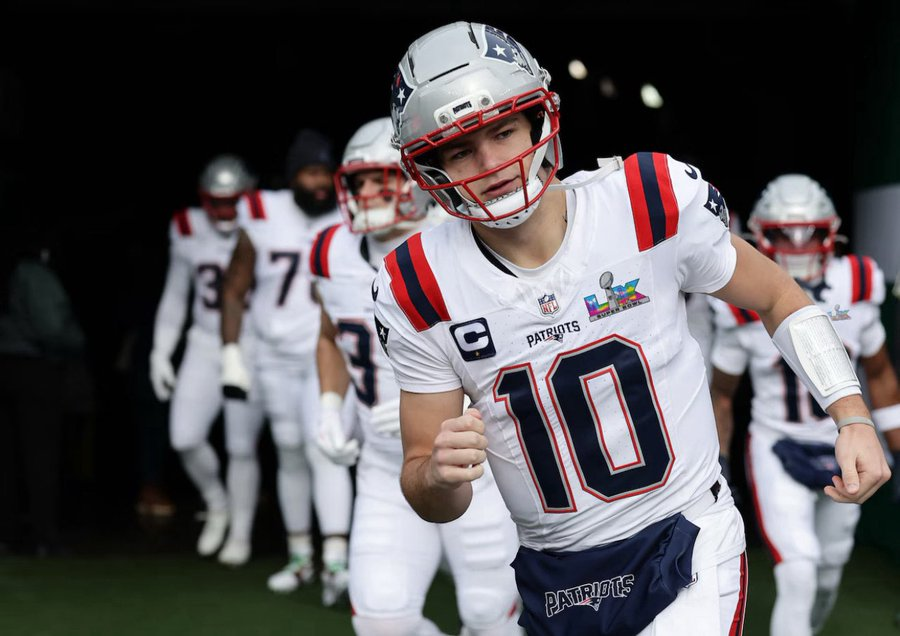
Built to Last: Why the 2025 Patriots Are Better Positioned for a Dynasty Than the 2001 Team
Why the 2025 Patriots may be better built for a dynasty than the 2001 team—youth, culture, coaching stability, drafting, and a modern NFL approach.

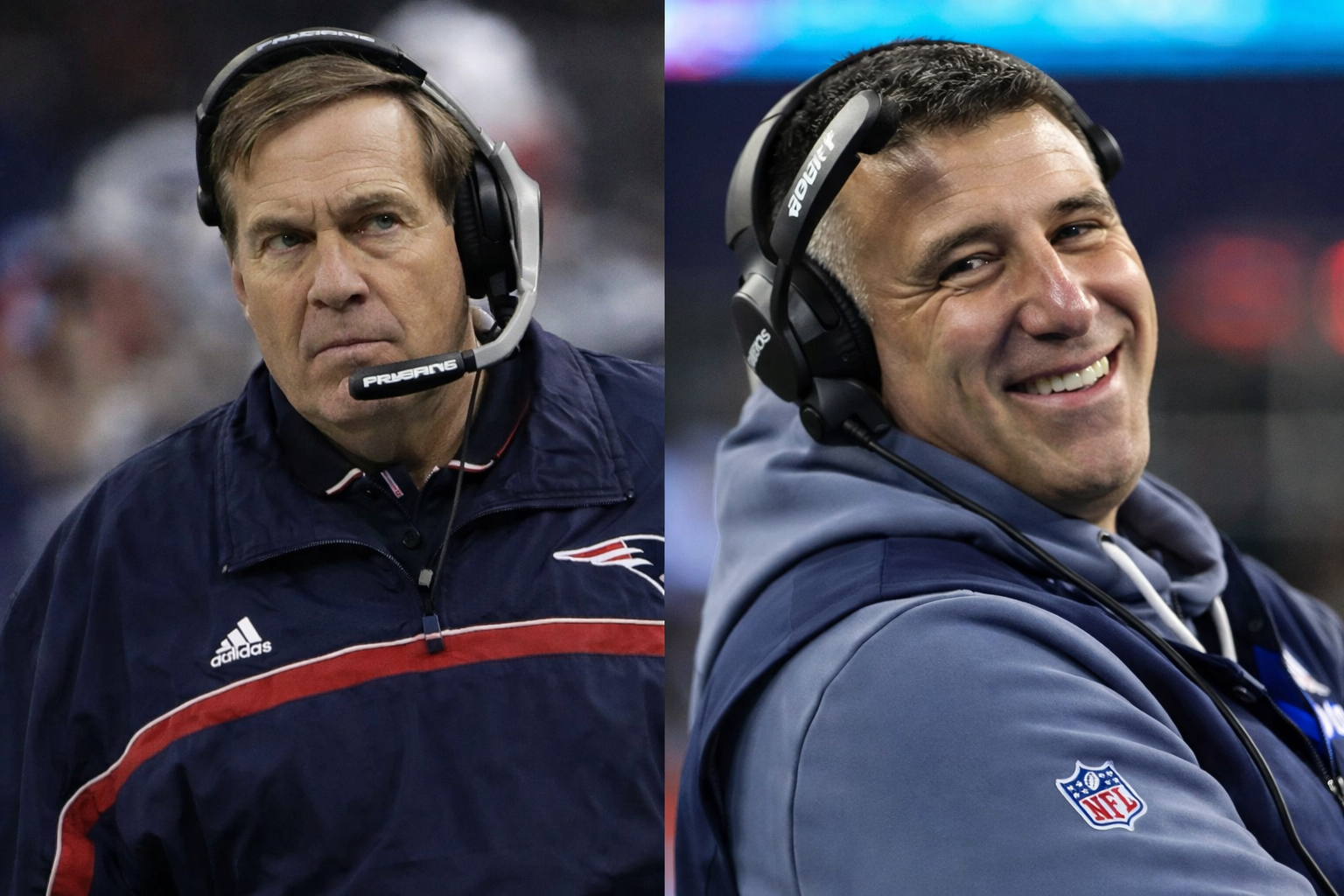
Might the current iteration of the New England Patriots be better positioned to begin a dynasty than the 2001 team? It’s a question that’s been lingering in my head for a few days now.
I’m not saying this team is destined to win the Super Bowl on February 8 in Santa Clara. Not yet, anyway. That prediction can wait for later this week.
Still, the fact that the Patriots are even in this position during Year One of the Mike Vrabel era is remarkable. And it got me thinking that this team, unlike its 2001 predecessor, is being built the right way—perfectly aligned in youth, coaching, and philosophy—instead of stumbling into greatness by circumstance (Mo Lewis almost killing Drew Bledsoe and opening the door for Tom Brady).
Youth
The current Patriots are one of the youngest teams in the NFL. The 2001 team was not. That group was a veteran roster led by an unheralded second-year quarterback who was being asked to just not screw anything up.
On offense, the core pieces were already well into their careers. Antowain Smith was 29 and serving as the workhorse running back. Troy Brown was 30, the team’s top receiver. The other primary wideout, David Patten, was 27 and had already been cast off by the New York Giants before landing in New England.
The defense was the true backbone of that 2001 team—and it, too, was built on experience. Willie McGinest (30), Tedy Bruschi (28), Ty Law (27), and Lawyer Milloy (27) formed the heart of the unit, all drafted years earlier under Bill Parcells. Belichick deserves credit for supplementing that core with veterans like Bobby Hamilton (30), Anthony Pleasant (33), and Otis Smith (36), but this was not a young group growing together. It was a seasoned, mish-mashed roster trying to squeeze out whatever they had left of their careers. They relied on guile more than talent.
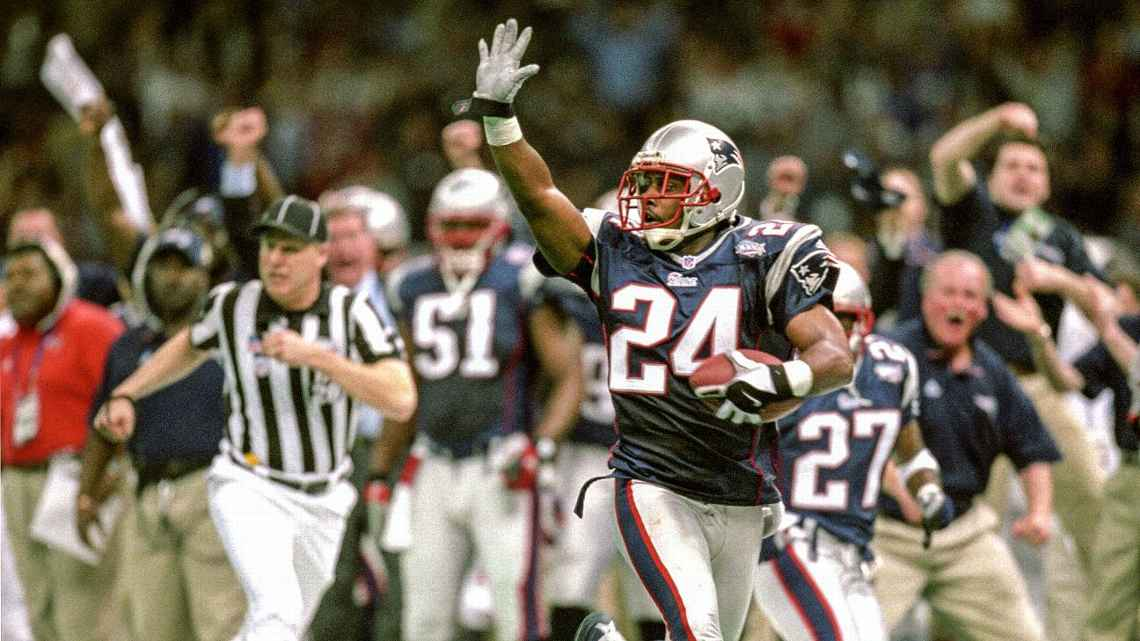
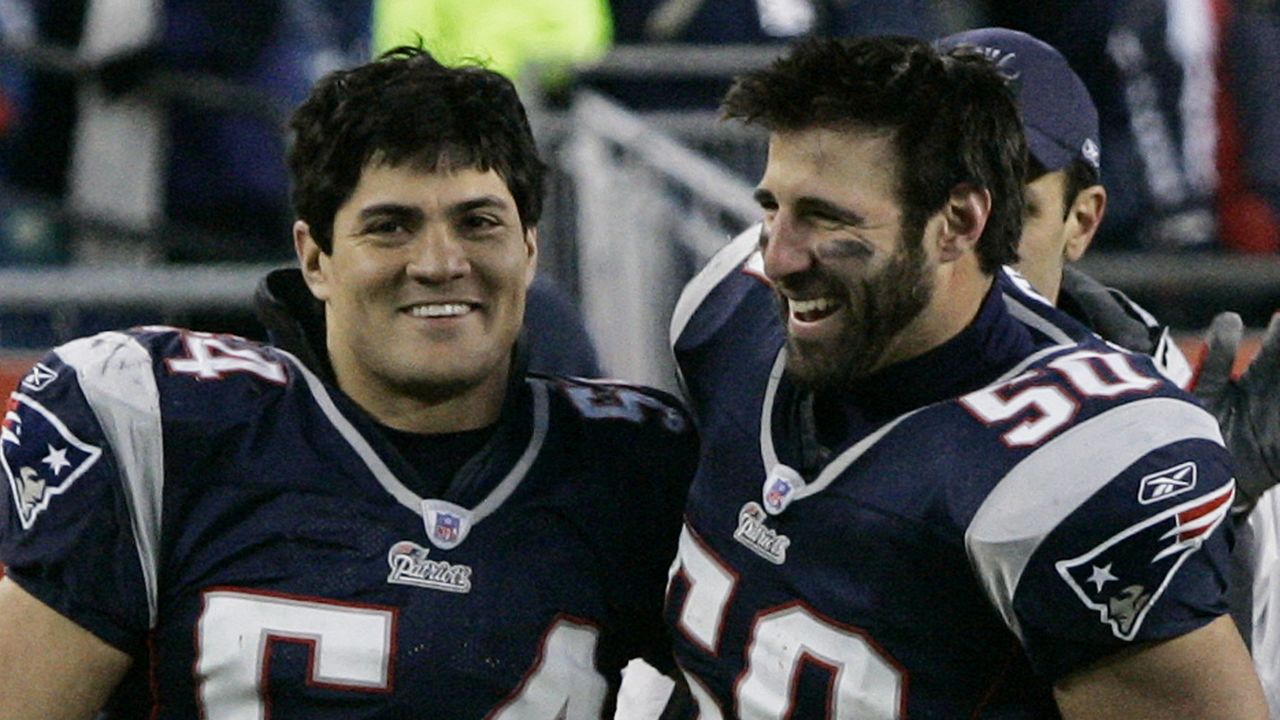
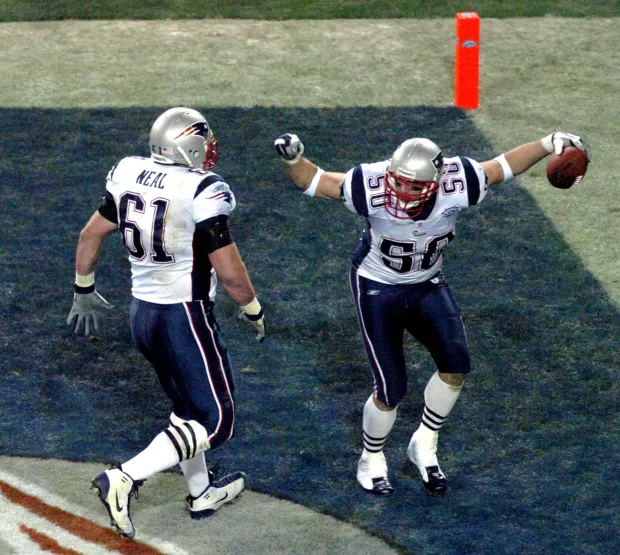
That team was also in Year Two of the Belichick rebuild, a detail that often gets glossed over. The first year didn’t go well. The Patriots finished 5–11.
By contrast, this current squad might have been satisfied with five wins at the outset, considering the Patriots had managed just four victories in each of the previous two seasons. Instead of just tinkering with the bottom half of the roster, Mike Vrabel took a blow torch to the entire roster, turning over nearly half the team—including all six captains from the year before.
He came to New England, primarily, because of Drake Maye and he was determined to build a new culture and a new roster around his young, talented quarterback.
The cultural reset began with the construction of Mike Vrabel’s coaching staff, then carried through free agency and the draft. Vrabel wasn't looking at things just in terms of numbers and aesthetics. He was looking at how pieces fit together.
Unlike the free agents Bill Belichick often targeted late in his tenure—veterans (Chad Ochocinco, Stephen Jackson, Joey Galloway – I could go on and on) on the downside of their careers who might have had something left for a year, or even a few games—Vrabel went after players in their mid-to-late 20s, still approaching their prime. He didn't evaluate players on what they've done in their past, but, instead, what they have the potential to do in the future.
Vrabel looked at players who were viewed as underachievers, like K’Lavon Chaisson, players whose tools maybe had never been coached up the right way. Others, like Robert Spillane, had worked their way up from practice squads, and were on an upward, not downward, trajectory. These players were hungry, humble, and appreciative.
Vrabel also understood the importance of the NFL draft. It is not a time to be cute – to put your dog on camera sitting behind a laptop on draft day when it is your turn to pick. The draft is not an opportunity to prove how much smarter than everyone else you think you are by taking a Division II safety in the second round when everyone else had that player projected to go two or three rounds later.

The 2025 draft that Vrabel and Eliot Wold put together may ultimately be remembered as one of the greatest draft classes in franchise history. After effectively flushing most of the 2024 draft class from the roster—with Drake Maye as the lone exception—the Patriots saw six members of the 2025 class make significant, immediate contributions.
That kind of rookie impact doesn’t happen by accident. It reflects clarity of vision, alignment between coaching and personnel, and a front office willing to draft for fit, not ego.
Bill Belichick rightly gets enormous credit for drafting Tom Brady in the sixth round in 2000. What often gets lost, however, is just how poor the rest of that draft turned out to be.
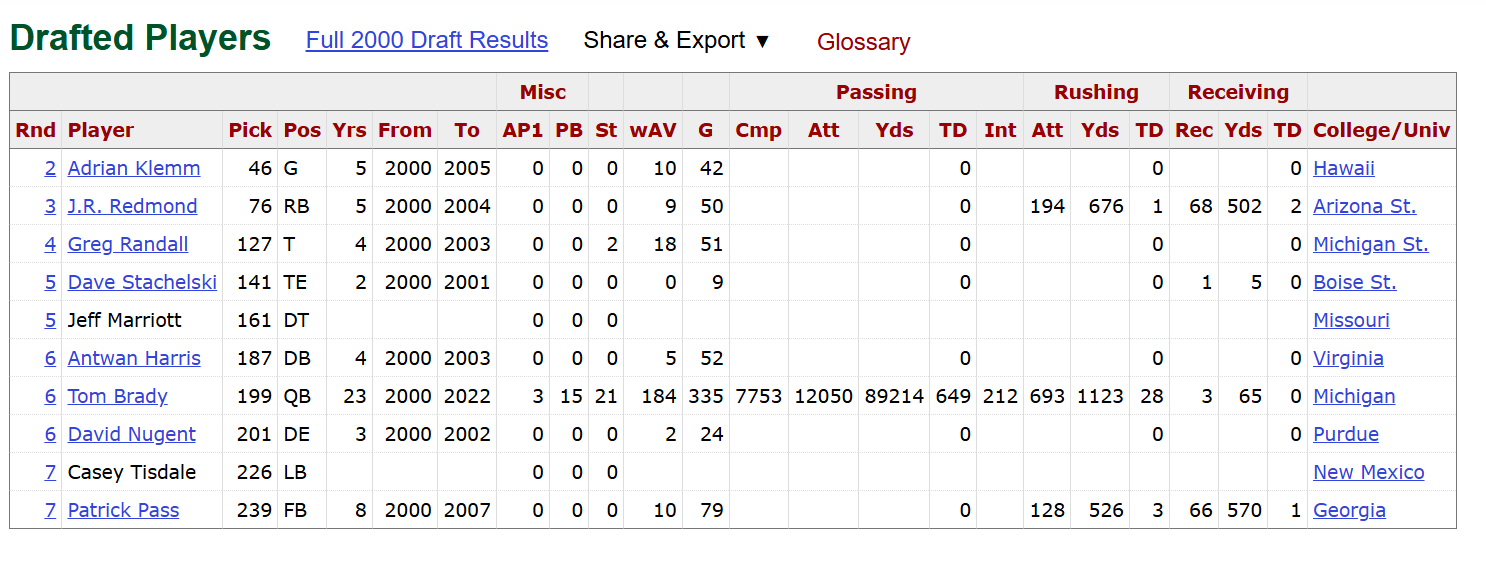
None of the players Belichick selected before Brady that year went on to play more than 52 NFL games. Brady alone played more games than the other nine Patriots draft picks from 2000 combined.
Belichick didn’t fare much better in the 2001 draft. He absolutely nailed his first two selections—Richard Seymour and Matt Light. But beyond them, it proved to be another missed opportunity. None of the remaining eight picks from that draft played more than 26 games in the NFL.
The draft is the lighter fluid that keeps a dynasty alive. Every team needs that constant infusion of youth—especially high-end players on rookie contracts—to maintain both competitive edge and financial flexibility.
No one expected the Patriots' championship window to open up so soon, and that is what makes this opportunity so much more golden.
The experience Drake Maye—and the rest of the Patriots’ young core—has accumulated in such a short time is invaluable. This team has already faced a lot of adversity. They’ve proven to be road "WARR-I-ORS," becoming the first team in NFL history to go 9–0 on the road in a full season. That confidence away from home is precisely why the Patriots have chosen to wear their road whites on Super Bowl Sunday.
More importantly, they’ve learned what winning in January actually demands. It's one thing to be told about it, but it is another thing to experience it. The Patriots have played through wind, rain, and snow—blizzard conditions—on the road, in hostile environments where winning isn't always pretty.
That education is there for all to see during the AFC Championship Game against the Denver Broncos. Mic’d up on a heated bench late in the fourth quarter, Maye sat bundled under a thick warmup jacket, visibly shaking as blizzard conditions swirled through the stadium. When offensive coordinator Josh McDaniels came over to speak with him, Maye leaned in and admitted—quietly, honestly—“This is hard.”
Drake Maye: "It's hard... Good God"
— Michael Rodnick (@MJRodnick) January 28, 2026
Josh McDaniels: "Look at me, it's gonna be hard, but look, this will be the most rewarding 6 1/2 minutes of our lives if we can get it done." 🔥🔥🔥🔥🔥🔥
The vulnerability here... holy moly man.
🎥: @Patriots pic.twitter.com/CyoaTUQpti
It was a rare moment of vulnerability from a professional athlete, and a revealing one. Not because it showed weakness, but because it showed awareness. We, fans, were watching in real time as a young athlete was coming to grips with what it takes to become a champion.
It’s a lesson some quarterbacks take years to understand and accept.
The most famous example, of course, is Dan Marino. Marino reached the Super Bowl in just his second season. It felt to all who witnessed Marino's greatness that year that it would be the first of many Super Bowl visits for him. It turned out to be his only one.
Early success doesn’t buy you a season's pass to the Super Bowl. It does teach you how narrow the path really is to get there, and how difficult admission is.
That’s what makes Maye’s sideline admission—“This is hard”—so important. He’s learning, already, what it is going to take in the coming years to return to this point. Fortunately, he is learning these lessons as his team continues to win – an added bonus.
Coaching staff
Which brings us to the coaching staff.
Josh McDaniels’ response to Drake Maye’s “This is hard” moment speaks volumes of the experience of this staff. McDaniels dropped to one knee and, like a father speaking to a son, said to Maye,
"I know, listen to me, look at me, it's going to be hard but this is going to be the most rewarding six-and-a-half minutes of our lives if we can get it done."
Those weren't just hollow words. They were words coming from someone who has been to the mountaintop—who knows what it looks like from up there, and the blood, sweat, and tears it takes to get there.
Including McDaniels and Mike Vrabel, the Patriots entered the season with five coaches who have head-coaching experience: Vrabel, McDaniels, Doug Marrone, Thomas Brown, and Ben McAdoo. That level of experience on one staff is almost unheard of. It requires a head coach secure enough to welcome it—and skilled enough to unify it. Not every person would feel comfortable in a situation like that--seemingly always looking over their shoulder.
Bill Belichick also had a seasoned, battle-tested staff in 2001. Charlie Weis and Romeo Crennel had been alongside Belichick dating back to the Parcells years with the Giants. Belichick had his loyal minions. They were his "yes" men.
Vrabel's staff wasn’t assembled with a closed mind. He didn't choose coaches who would just agree with everything he said. He wanted fresh ideas. It's why he spent his year "away from head coaching" roaming the sidelines of the Cleveland Browns.
The coaches Vrabel chose for his staff were chosen on the basis of one thing, and one thing only: are you the best at what you do?
Belichick being close-minded to outsiders would prove to he his undoing. As the Patriots became more successful, it was inevitable that the rest of the league would come knocking – wanting to take coaches away from his staff.
After the Patriots won their third Super Bowl in four years, offensive coordinator Charlie Weis left to become head coach at Notre Dame in 2005. Defensive coordinator Romeo Crennel departed for Cleveland—ironically, the site of Belichick’s only other head-coaching experience prior to New England.
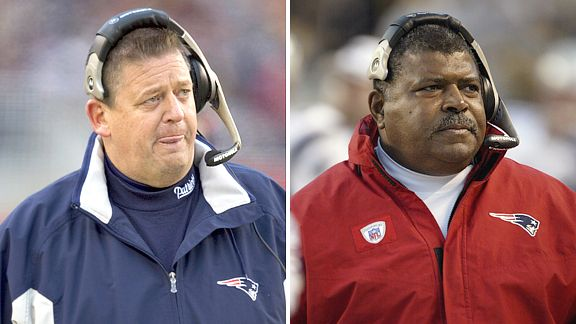
Crennel’s replacement, Eric Mangini, lasted one season as defensive coordinator before bolting for a head-coaching job of his own—with the rival New York Jets—in 2006.
The body blows kept coming for Belichick. Josh McDaniels, who had risen entirely within the Patriots’ system, was the offensive coordinator during the historic 2007 season when New England went undefeated in the regular season. That Patriots' offense led by Brady and Moss became one of the most explosive offenses the league has ever seen. Two years later, he was gone—hired away by Denver to become their head coach in 2009.
Little by little, Bill Belichick’s inner circle shrank. Eventually, it all but disappeared. By 2022, Belichick had no offensive coordinator at all. The offense was run by Matt Patricia, a lifelong defensive coach, with assistance from Joe Judge, whose background was almost entirely in special teams. It was a desperate move by an aging head coach who had run out of people he could trust.
It remains to be seen how much interest other teams will show in Mike Vrabel’s staff. The more interesting question may be how much interest the Patriots’ assistants themselves have in becoming head coaches again. Josh McDaniels would be the most obvious name to draw attention, given his work with Drake Maye and the remarkable turnaround of the Patriots’ offense—from 30th in the league to second in scoring in one season.
Fortunately, McDaniels may be exactly where he wants to be. He has four young children, ranging from ages three to twelve, and has spoken openly about his affection for the Boston area. In recent press conferences, he doesn’t sound restless or ambitious. He looks extraordinarily happy and comfortable. He said in October:
“I love living in New England.... I just try to focus on now. Really enjoying coaching for Mike … It would be surprising if I moved my kids out of Westwood.”
Stability and consistency amongst a coaching staff is so very important, especially with a young quarterback. It may prove to be one of the quiet advantages separating this era from the one that slowly unraveled before it. Stability means not having to waste time starting over.
Doug Marrone’s success with the offensive line has gone mostly forgotten with the resurgence of Josh McDaniels’ offense. At 61, Marrone has helped fill the cavernous black hole that was left when should-be-Hall-of-Famer Dante Scarnecchia retired as offensive line coach in 2019.
Having already experienced being a head coach in Buffalo and Jacksonville, Marrone has not publicly expressed interest in returning to a head-coaching role. Instead, his comments and focus have centered on positional coaching and player development, a role he appears comfortable embracing at this stage of his career.
That, too, is telling. It’s another indicator that Vrabel and company may have had the foresight to put together a coaching staff with the understanding they are going to be together for the long haul and that everyone is satisfied with their roles.
Head Coach
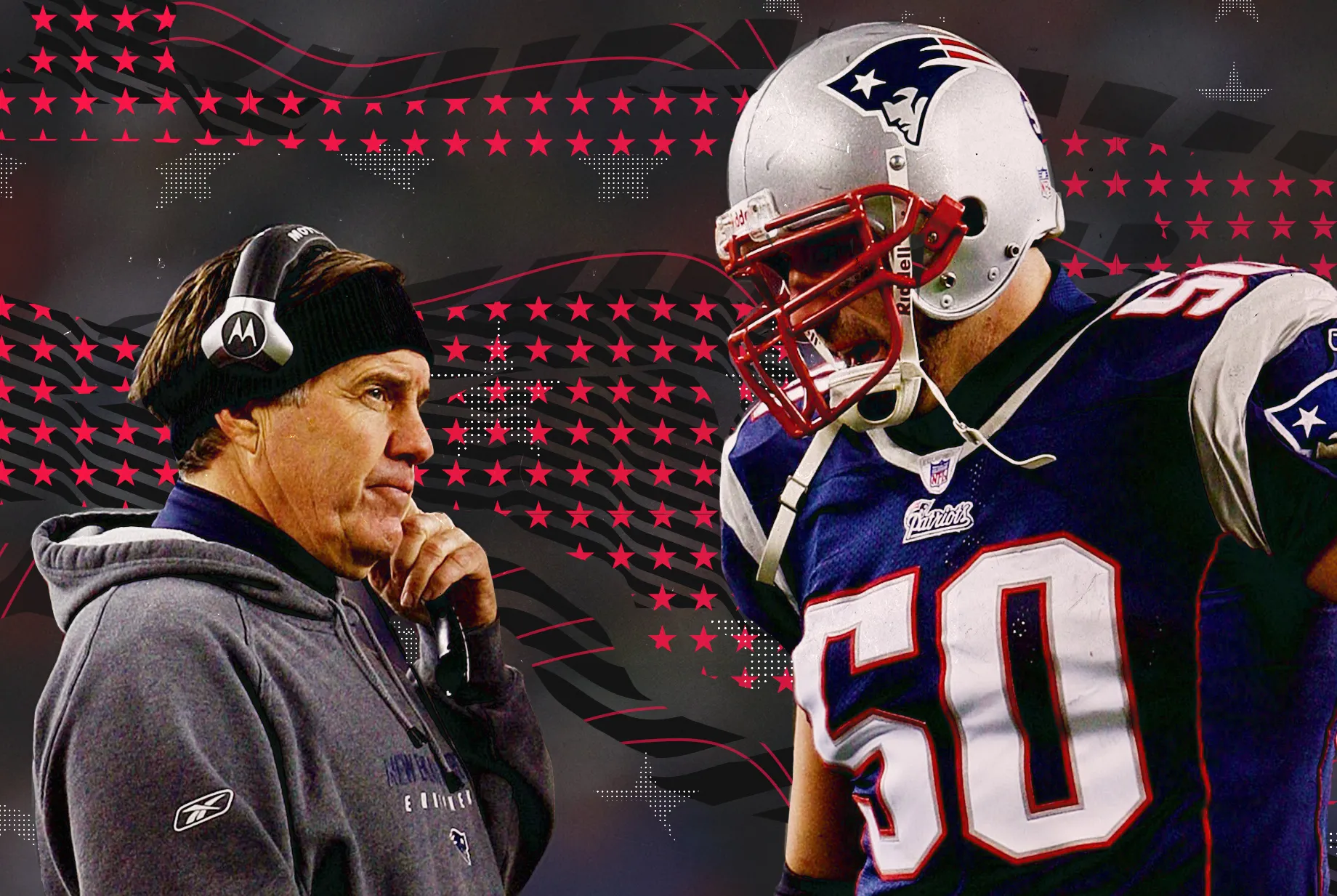
Which brings us to the head coach. And the same disclaimer applies here as it did with the Drake Maye–Tom Brady comparison. I’m not arguing that Mike Vrabel in 2026 is a better head coach than Bill Belichick was in 2001. I am arguing that Vrabel is better equipped to adapt to changes to the modern game, pop culture, and the way today’s players connect with leadership.
I always think back to a moment late in Belichick’s tenure that felt revealing about the way Belichick's old school philosophy clashed with today's culture. After a rare win, Bailey Zappe burst into the locker room energized, celebrating loudly. He wrapped his arms around offensive coordinator Bill O'Brien in a spontaneous hug. But as soon as he released it, Zappe caught sight of Belichick standing a few feet away. His demeanor changed instantly. Immediately, Zappe became stoic. Zappe looked almost hesitant—as if asking permission with his eyes—before approaching. Belichick gave a subtle nod, and Zappe responded with a brief handshake and a "Thank you, sir."
The difference between how Zappe greeted O’Brien and then Belichick after Thursday’s win is just so good.
— Andrew Callahan (@_AndrewCallahan) December 8, 2023
O’Brien? Like he’s one of the boys.
Belichick? Like he’s Zappe’s military father-in-law who will never forgive Zappe for not asking for his blessing.
(via @Patriots) pic.twitter.com/7QEn0NeUvV
Now contrast that with what we’ve seen all season under Vrabel. The embraces outside the locker room as players return from games. The raw emotion. Vrabel shouting “Warriors!” amid the chaos of celebration. He is not putting on a show for the cameras. It is genuine raw emotion. It is an understanding that winning at this level involves hard work, and winning should be celebrated. And football should be fun.
Mike Vrabel makes his grand entrance at the #Patriots send-off rally!
— Carlos A. Lopez (@LosTalksPats) February 1, 2026
“Warriors! Come out and play!!”
(🎥 @Patriots) pic.twitter.com/mDrwVaXTOg
Could you ever picture Belichick doing any of that?
Neither approach is inherently right or wrong. But one feels unmistakably aligned with today’s NFL – a generation that requires validation, communication, and respect.
None of this has anything to do with X’s and O’s. But it may have everything to do with who wants to come to New England.
For the first half of Bill Belichick’s tenure, the Patriots were a magnet for free agents for one simple reason: they were contenders every year. Veterans knew New England gave them a legitimate shot at a Super Bowl. Offensive players, in particular, were eager to play alongside Tom Brady—as Randy Moss did—because everyone wanted to be associated with a winner.
Late in Belichick’s run, the shine had come off. When Brady left and the Patriots stopped winning, free agents moved New England down their list.
"Only if no one else wants me, then I'll consider them."
Players began to remember that New England winters are long, and that Massachusetts taxes are steep.
The examples were telling. Calvin Ridley took less money to play in Tennessee. Brandon Aiyuk reportedly passed on a deal that would have brought him to New England because he didn’t want his value tied to quarterback uncertainty.
But that is all about to change.
And it is yet another reason this team may be poised to go on a run.
Front Office
Now here is where the Patriots may have their greatest opportunity to build a run that could match—or even surpass—either of their first two dynasties.
No one outside the building truly knows the inner dynamics between Mike Vrabel and Eliot Wolf. And frankly, no one should care. What matters is whether the arrangement works. If both are aligned and comfortable in their roles, the focus should be on outcomes. It’s entirely possible Wolf is better served operating without the spotlight, freed to concentrate on what he does best: scouting and evaluation. Let Vrabel do the press conferences and media interviews. Let Vrabel be the face of the franchise. Wolf will just stay behind the curtain and be content being the Wizard of Foxboro.
That delegation of roles, alone, addresses what may have been Bill Belichick’s single biggest weakness late in his tenure. Head Coach Belichick was elite. General Manager Belichick was not. Belichick even admitted no one person could do both jobs, effectively.
At times, it felt as if the draft itself had become a joke for Belichick—symbolized most memorably by the dog sitting at the desk photo-op. It showed complete disrespect for the process.
As with his coaching hires, Belichick's draft work increasingly prioritized comfort and familiarity. He leaned heavily on a narrow circle of trusted college programs and coaches, which is why Patriots draft boards began to feel repetitive—Rutgers, LSU, Alabama, over and over again.
The potential advantage now is obvious. A modern structure. A head coach focused on leadership and culture. A personnel chief focused on evaluation and depth. If that balance holds, the Patriots won’t just be competitive—they’ll be sustainable.
And, finally, a big reason things may be even better this time around:
Ego
I know how this sounds to fans of other teams—and it’s part of why the Patriots have been so widely disliked—but it’s fair to ask whether Bill Belichick’s ego sometimes got in the way of maximizing what was already the greatest dynasty the league has ever seen. If that ego had been smaller, it’s reasonable to wonder whether Tom Brady and the Patriots might have won even more than six Super Bowls.
One example dates back to 2010, when the Patriots finished 14–2 and hosted the Wild Card New York Jets in the divisional round. The Jets were coached by Rex Ryan, and days before the game, a video involving Ryan and his wife surfaced on a foot-fetish website. During a media availability that week, Patriots star wide receiver Wes Welker made a series of intentional “foot” puns. Belichick didn’t find it amusing—and responded by benching Welker for the opening offensive series.
The Patriots lost that game 28–21. Maybe Belichick believed he could afford to send a message against a weak Wild Card opponent. Maybe he believed discipline and subservience were more important to him. But like Drake Maye just learned, "This is hard." Winning is hard – no matter the opponent.
It is a fine line between winning and losing, especially in the playoffs. One extra drive. One extra possession. One play. Maybe benching Welker – even for one series – de-moralized the player and the team that day. That may have been enough to flush that 14-2 season down the toilet.
The most glaring example of Belichick's hubris came seven years later in Super Bowl LII. The Patriots entered the game as heavy favorites against the Philadelphia Eagles, led by backup quarterback Nick Foles. For reasons that remain unexplained to this day, Belichick benched Super Bowl hero Malcolm Butler. The Patriots’ defense surrendered 41 points, the most ever allowed by a Belichick-coached team in a Super Bowl, and New England lost 41–33—again, by one score.
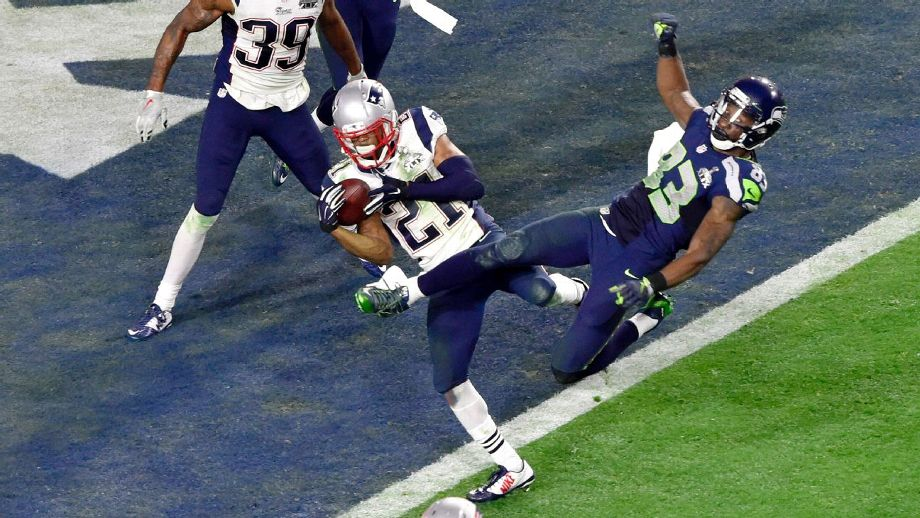
Beyond those moments on the field, ego also showed up in roster construction. Belichick increasingly trusted his own evaluations over league consensus, drafting players well ahead of where they were projected. He believed he was smarter than everyone else – draftniks be damned.
Bill Belichick Draft “Reaches” — Chronological Order
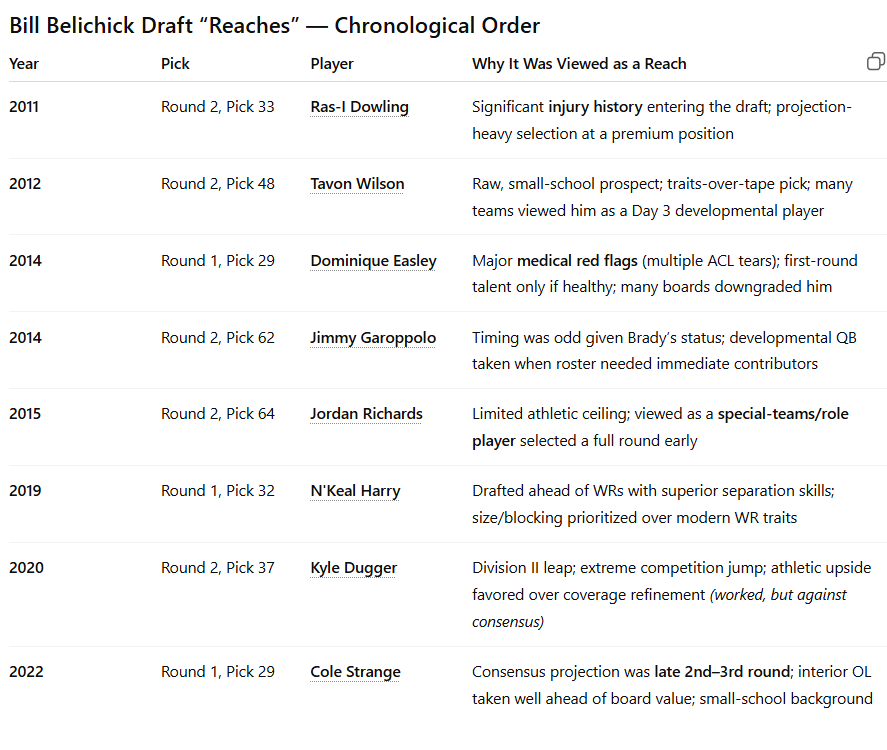
Now contrast those failed draft picks with Vrabel's first draft – one in which he stuck to the consensus draft board (with one possible exception – Craig Woodson):
New England Patriots — 2025 Draft Class & Contributions
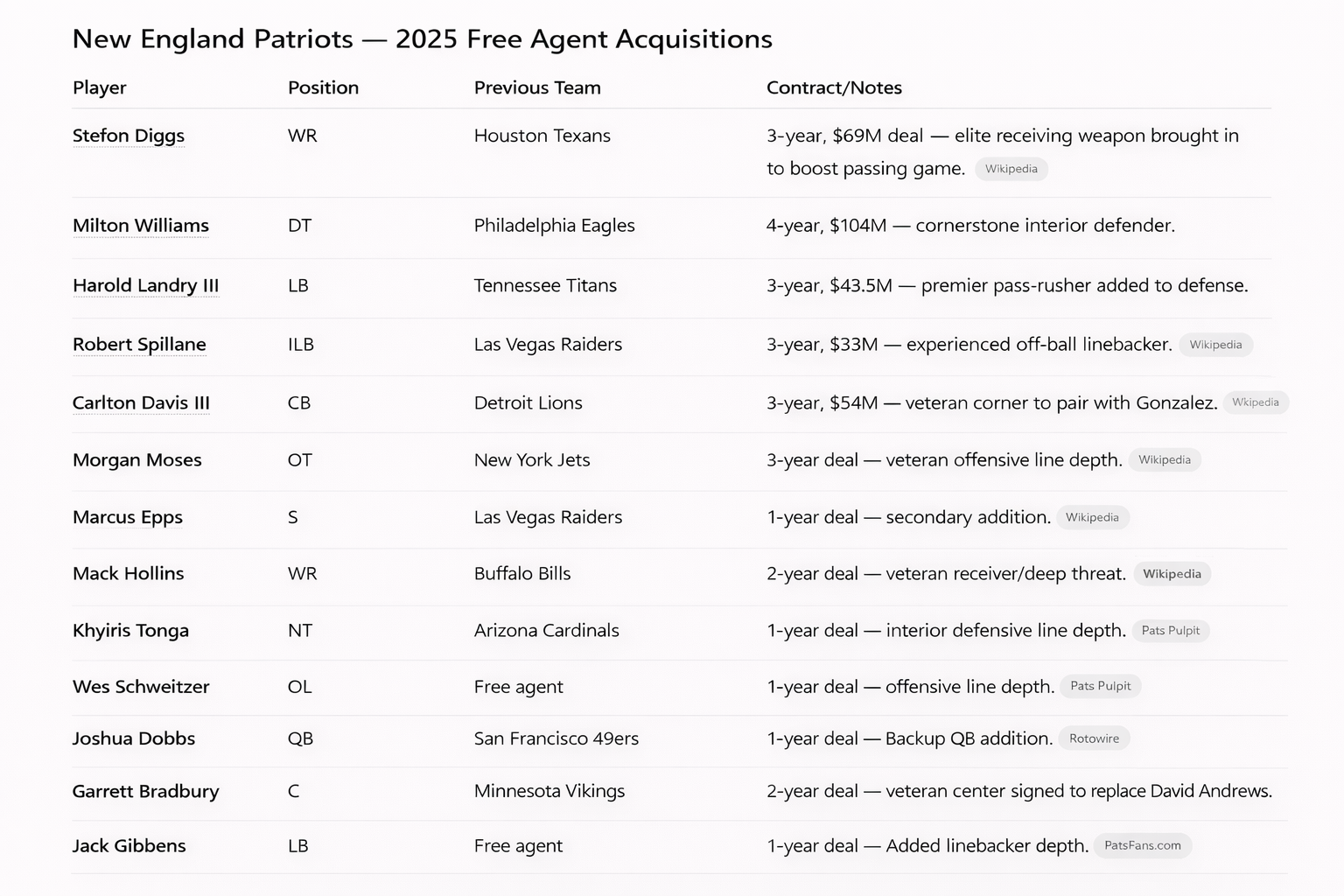
And let's take a look at the free agents Vrabel and Wolf targeted and signed.
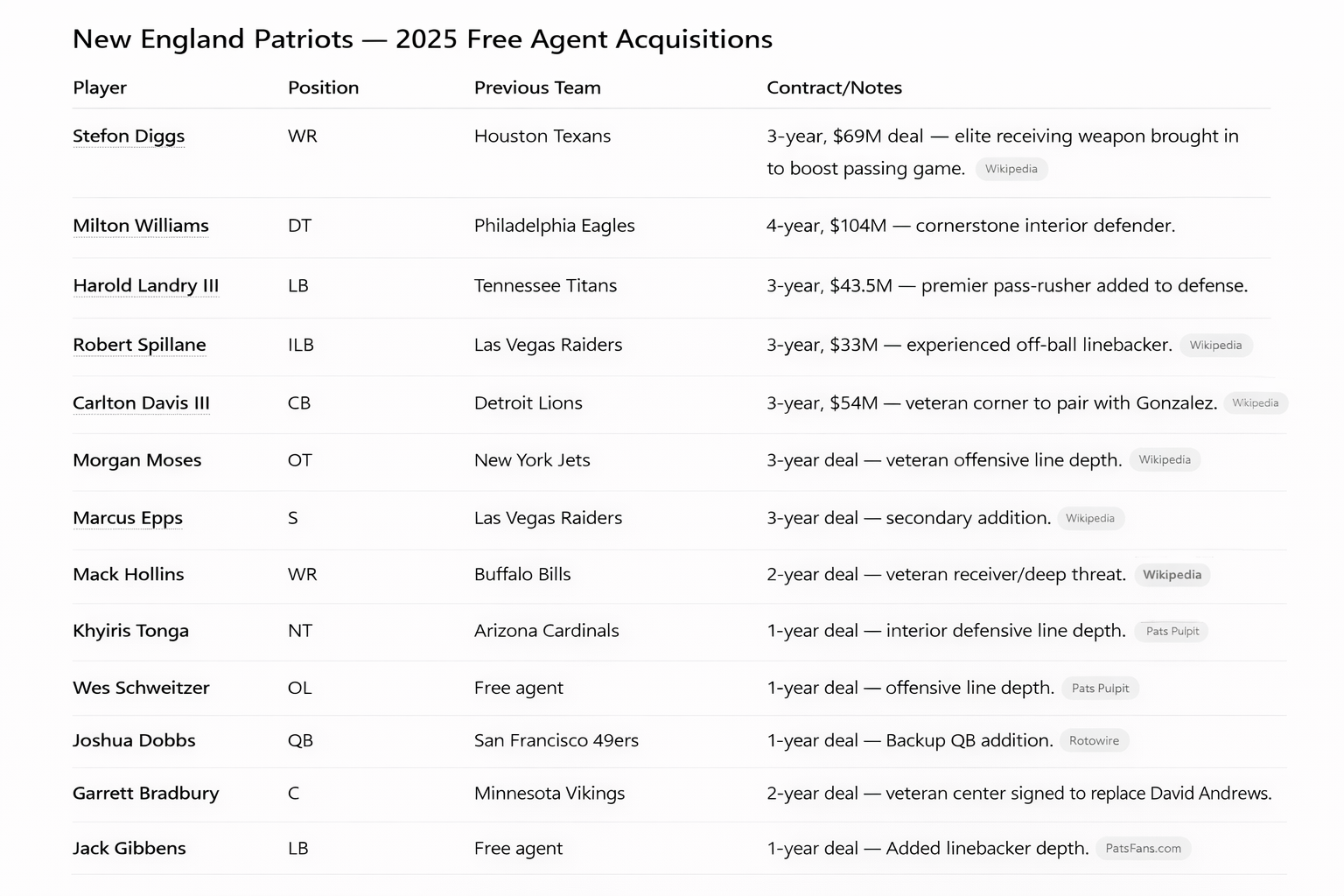
That is about as perfect an offseason as any team could ever hope for.
As Mike Vrabel has said repeatedly this season, “This is all about the players.”
It sounds simple, almost cliché—but it’s a lesson Bill Belichick refused to accept.
Dynasties don’t collapse because of one decision.
They erode slowly.
Through stubbornness. Through a belief that what worked once before will work over and over again. Through missed drafts. Through taking things too personal. Through not being open-minded.
In the later years, ego may have been what finally brought Belichick and the Patriots crashing down to earth.
Nothing illustrates that more clearly than Belichick’s refusal to re-sign Tom Brady. The greatest quarterback of all time walked away not because he wanted to—but because Belichick wanted to prove the dynasty belonged to him. That decision didn’t just end an era, but exposed an aging head coach of all his flaws.
Now contrast that with where the Patriots stand today.
They have a quickly developing star quarterback starting a Super Bowl at a younger age than even Tom Brady was in his first Super Bowl. A coaching staff that is rich in experience, content in their roles, and lacking any further personal ambition. A front office structured and disciplined. A head coach secure enough to trust others. And, quite frankly, a league landscape that lacks generational superstars like Peyton Manning or Ben Roethlisberger.
None of this guarantees a dynasty. Because just getting to a Super Bowl is hard.
But for all the reasons outlined—youthfulness, exuberance, mutual respect, delegation, stability, awareness, open-mindedness, and selflessness—this version of the Patriots may be better positioned to sustain greatness than the one that stumbled upon it in 2001.